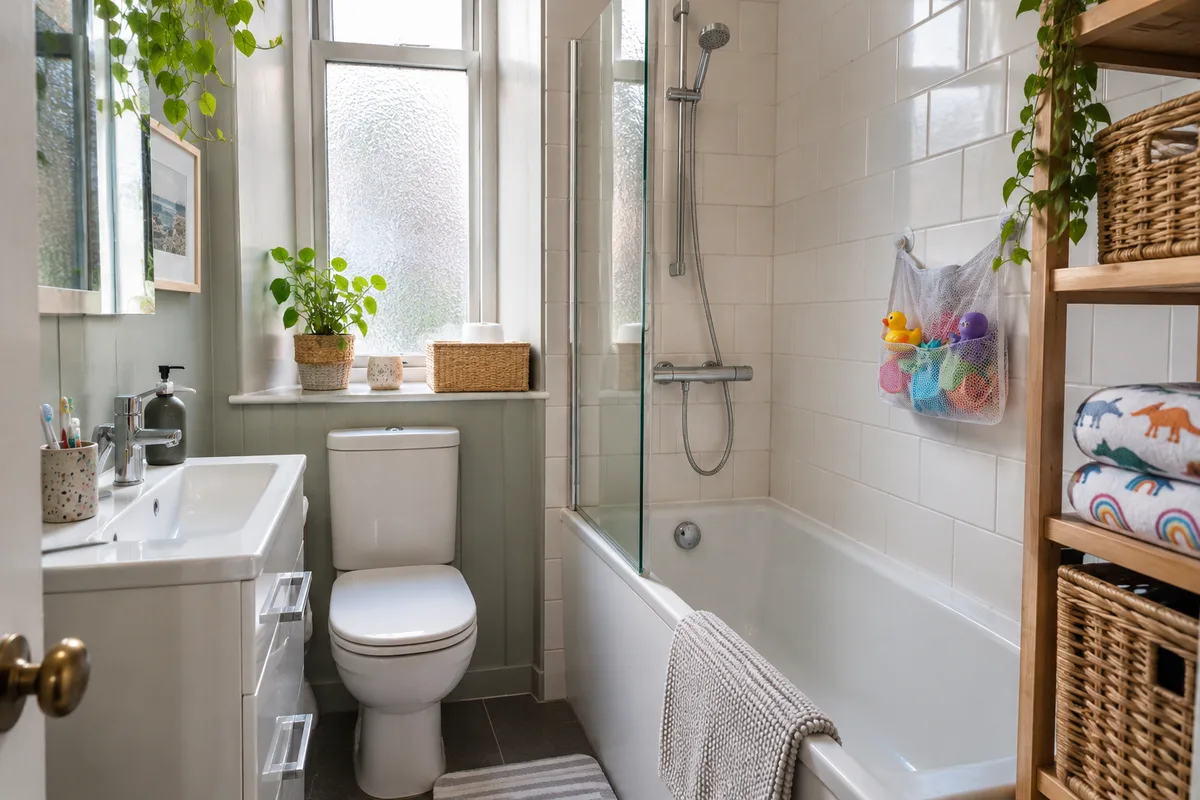
A bathroom with young children has to do more jobs than most rooms. It must cope with splashing, toys, towels and medicines, and it must be safe on a wet floor. In a flat there is little spare space, so each choice counts. This guide covers the practical choices that make bath time easier now and still suit your family later.
Keep a bath while the children are small
If you have young children, a bath is usually worth keeping. Small children are easier to wash in a bath than in a shower, and a bath gives them somewhere to play. Replacing it with a shower is a big change that you may regret in the first few years. Our guide to small bathroom ideas with a bath shows how to fit one into a tight room.
A shower over the bath gives you both. It means the older children and adults can shower, and the little ones can still have a bath. Choose a bath with a flat, comfortable base and sides that you can lean over easily. If you are not sure, ask what suits your room before you decide. Later, when the children are older, you can think about changing. See our bath or walk-in shower guide for how to weigh that up.
Safer water: thermostatic valves and bath fillers
Hot water can scald, and small children can be hurt more quickly than adults. A thermostatic valve helps because it mixes the hot and cold water and holds the temperature steady. It can also be set so that the water never gets too hot, which is a good safety measure in a family home. Ask your installer how the maximum temperature is set and tested.
Even so, children must never be left alone in the bath. A valve does not replace an adult in the room. Always check the water with your hand or elbow before you put a child in. Choose a bath filler or a tap with a cool-touch finish if you can, and keep the hot taps turned off properly. For a shower, a thermostatic valve is a sensible choice too, and our guide to electric or mixer showers in a tenement compares the options.
Floors and edges for wet little feet
Wet floors are slippery for everyone, and children run. Choose a floor with a textured or matt surface, and avoid shiny polished tiles. Vinyl or porcelain tiles with grip are good choices. Put a soft mat beside the bath, with a non-slip backing, and keep it dry. Our guide to bathroom flooring in older flats covers what suits an old timber floor.
Look at the edges too. A bath panel with rounded edges, and a basin and unit with softened corners, are kinder to a child who falls. Avoid sharp corners at head height. Wipe up splashes straight away. A small, practical change, such as a rubber mat inside the bath, can stop a slip before it happens.
Storage for toys, towels and medicines
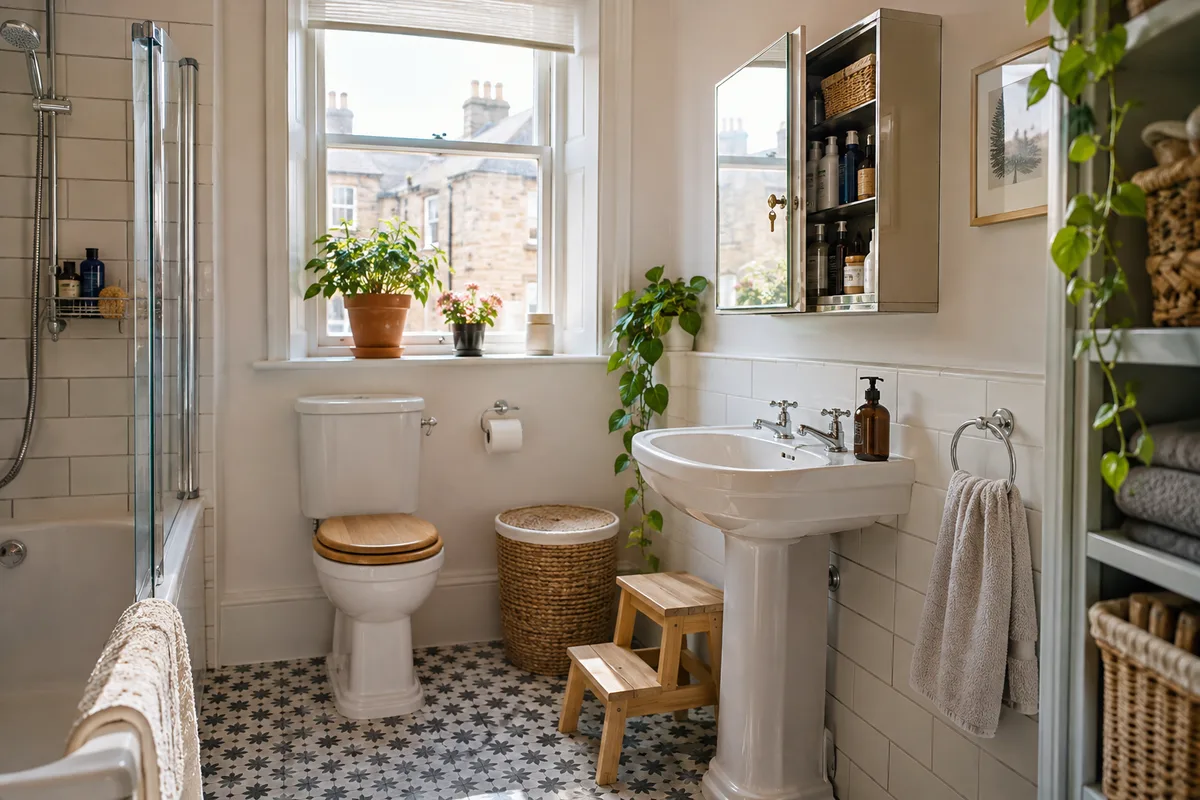
Children bring a lot of things into the bathroom. A basket or net for bath toys, a hook for each child's towel, and a shelf for bottles keep the floor clear. Wall-mounted storage gives you more space in a small room. Our guide to small bathroom storage cabinets shows the options.
Medicines, razors, cleaning products and anything else harmful need to be out of sight and out of reach. A lockable cabinet fitted high on the wall is the usual answer, and it is better than a low cupboard with a simple catch. Fit it firmly to the wall. Remember that children can climb, so higher is better. Check the fixings are right for the wall, since old plaster needs the proper plugs.
A shower handset that makes rinsing easy
A handset on a slide rail is useful for rinsing hair, washing a bath and cleaning the shower tray. It lets you adjust the height for a child and for an adult. A long flexible hose reaches the whole bath, and a simple spray pattern is easier to control than a fancy one.
Hang the handset where small hands cannot reach the controls easily, and get into the habit of testing the water first. A good valve keeps the temperature steady even when someone turns on a tap elsewhere. In some flats the pressure is low, so see our guide to shower water pressure in a tenement. If you want a sliding door or a screen, our guide to small bathroom shower enclosures explains the choices.
Basin height and a step that tidies away
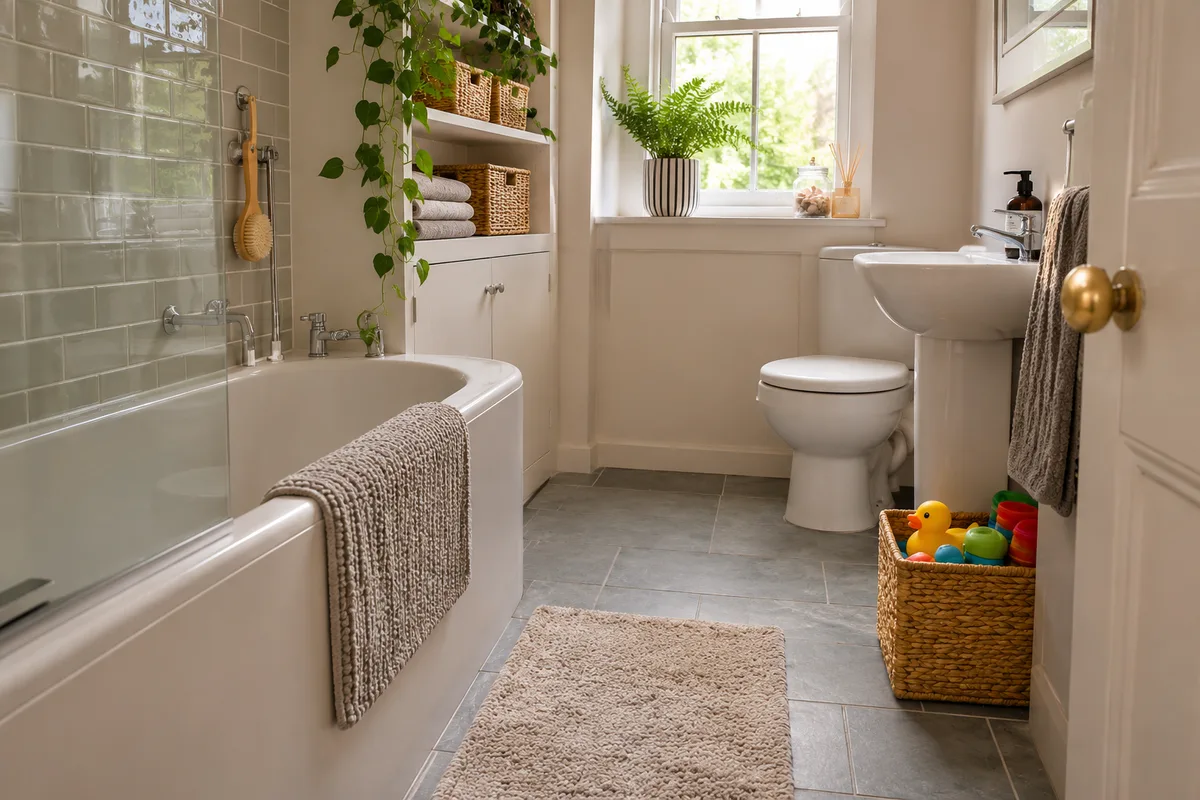
A basin set at an adult height is too high for a small child. Rather than fit a low basin that you will bend over for years, use a sturdy step stool. Choose one with a non-slip top and feet, that is wide enough to be stable, and that slides under the unit or hangs on a hook when you are done.
This keeps the room flexible, since the basin stays at a normal height for the adults and the child grows into it. Make sure the taps are easy to turn, and that the stool does not block the door. Keep the floor around the basin clear, and put a mirror at a height that works for you. Our small bathroom basin ideas help you choose one that suits a tight room.
Plan for the next ten years, not the next two
Children grow fast. Toys give way to shampoo, and the child who needs help today wants privacy in a few years. Choose fittings that you will not want to replace, such as plain white sanitary ware, neutral tiles and storage that works at any age. Bright colours and cartoon designs can be added with towels and mats, which are cheap to change.
Before you start, think about how you will cope without a bathroom. Read our guide to renovating your only bathroom. Most of our bathrooms are fitted in 3 to 7 days, and that is a short time without a bath for a family. For more ideas for a busy household, see our small family bathroom ideas and our small bathroom solutions. If you would like to talk it through, call us or ask for a free quote.
Guidance reviewed 14 November 2026. Technical and permission requirements depend on the property and proposed work; relevant guidance is linked in the article.