
Renovating your only bathroom needs a practical household plan as well as a new suite. In a Scottish flat, the work can affect the toilet, washing facilities, water supply and route through the home at different stages. Staying in the property may be manageable for some households, but it should not depend on an assumption that the toilet will always be usable. Agree the arrangements with the installer before work starts. This guide helps you identify the interruptions that matter and prepare the flat without turning the shared close into a storage area.
Agree toilet and washing arrangements first
Ask directly when the toilet will be disconnected, when the basin will be unavailable and when the shower or bath can be used again. Those timings may differ. A temporary reconnection is not something to assume; the installer needs to confirm whether it is feasible and appropriate for the stage of work.
Plan access to alternative facilities where needed. Consider early mornings, evenings and weekends, not just working hours. A nearby family member may be able to help with washing, but check the arrangement rather than relying on goodwill at short notice. Explain any health, mobility or caring needs that make an interruption difficult so they can be considered before the programme is agreed.

Plan who can stay at home
Think about who will be in the flat during the day and how they will use it. Noise, dust and limited access may make working from home uncomfortable. Children, pets and anyone who needs a quiet or predictable routine can require different arrangements. The right choice depends on the scope and household, not simply on the bathroom’s size.
If you decide to stay elsewhere for part of the work, coordinate access and communication with the installer. Agree how keys are handled and how decisions will be approved when you are absent. Do not book around a guessed completion date; use the proposed programme and discuss what would happen if hidden conditions changed it.
Keep a usable route through the flat
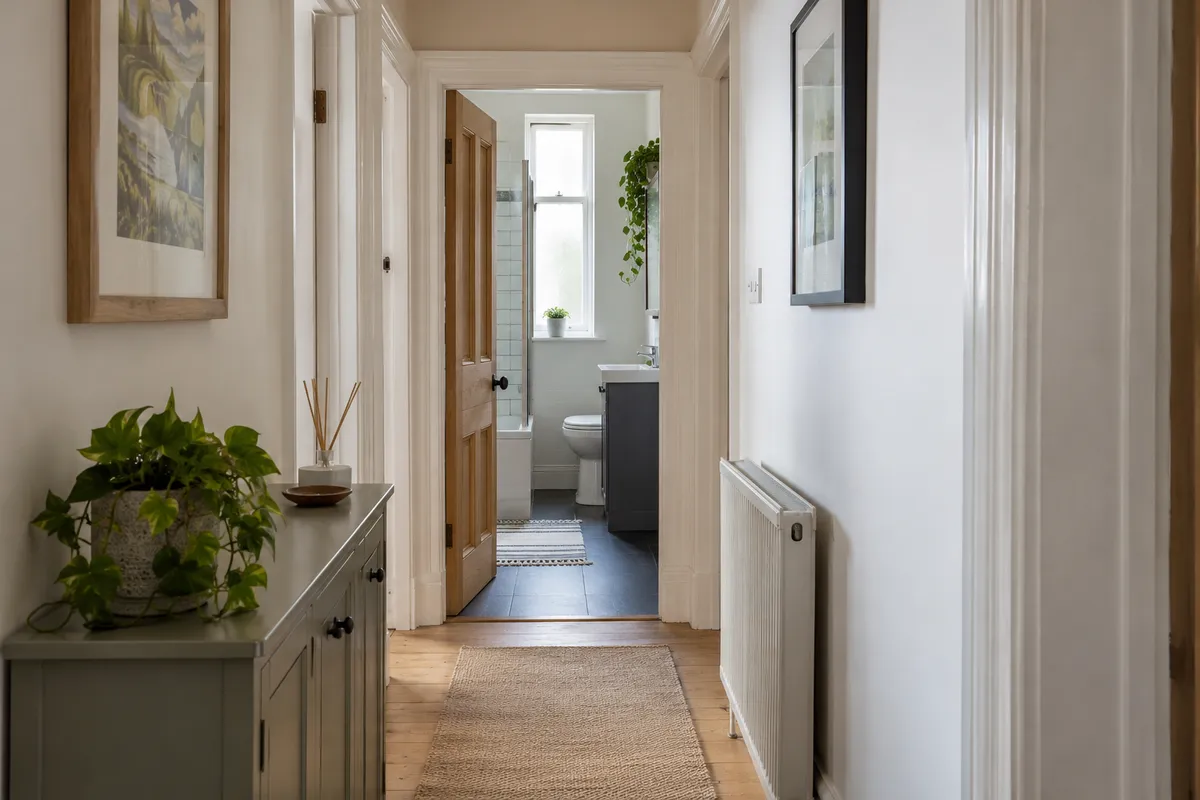
Identify the route between the entrance and bathroom, plus the parts of the home your household still needs to use. Move furniture and fragile items where appropriate before work begins. Discuss protection for floors and corners, and make sure agreed routes do not prevent doors from opening or interfere with safe access out of the flat.
The shared stair and close need separate consideration. Deliveries and waste should be planned so they do not obstruct neighbours. Our top-floor bathroom renovation guide covers the carrying route and shared-building arrangements in more detail. Even on a lower floor, a narrow turn or entrance can affect how materials arrive and leave.
Prepare for water and power interruptions
Ask which services will be interrupted and how much notice the installer expects to give. Establish whether an interruption concerns only the bathroom, the whole flat or a shared service that needs wider coordination. Do not operate unfamiliar shared valves or electrical equipment yourself in an attempt to speed the work along.
Plan ordinary household tasks around confirmed interruptions: washing, cooking and working at home may all be affected. Keep a contact number available so the installer can reach you if conditions change. If an essential household need depends on a service remaining available, explain it before installation rather than after the room has already been disconnected.
Protect belongings and contain dust
Empty bathroom cupboards and remove towels, toiletries, medicines and decorative items from the work area. Pack a small wash bag with what you need each day, keeping important products accessible elsewhere. Move items from nearby open shelves where dust could settle, and ask what protection the installation team provides as part of its scope.
Discuss the boundaries of the working area and where tools or products will be stored overnight. Keep children and pets away from unfinished surfaces and materials. Opening a door to inspect progress is not the same as being told the room is safe to use. Follow the agreed access instructions, particularly while products are curing or checks are incomplete.
Keep neighbours informed about disruption
Tell neighbours about agreed noisy stages or shared-service interruptions through the appropriate channels. Where a factor or owners’ arrangement applies, establish what information it requires. Communicate the actual plan rather than promising that every day will be quiet or giving dates that have not been confirmed by the installer.
Ask who will deal with delivery questions or concerns about the common areas. A named contact and an agreed carrying route make the project easier to manage. Keep the focus on practical coordination: bathroom work inside your flat does not remove the need to consider the shared building through which people and materials must pass.
Make the room ready for everyday use
Before moving everything back, confirm that the fittings can be used and that any required curing time has passed. Ask for a demonstration of the shower, extractor, heating and other controls included in the work. Check storage, cleaning access and the agreed outstanding-items list. Put products back gradually so you can see what actually belongs in the new room.
Read our bathroom renovation timescale guide for the sequence behind these arrangements. Our Scottish tenement bathroom renovation service is the next step when you are ready to discuss the work. A clear household plan protects the value of the renovation by making the installation period understandable before it starts.
Guidance reviewed 7 October 2026. Technical and permission requirements depend on the property and proposed work; relevant guidance is linked in the article.