
How long a bathroom renovation takes depends on the work being done and the condition of the room. In a Scottish tenement, the planning period, product lead times and any required approvals are separate from the days when installers are working in the flat. A straightforward replacement and a layout change involving drainage or floor repairs should not be given the same assumed timetable. The useful answer is a written sequence for your project, including when essential facilities will be unavailable. This guide explains the stages that belong in that conversation.
Separate planning time from installation time
The project begins before the old bathroom is removed. A survey, design discussion, product selection and quotation all need to happen first. If a proposal requires permission or further technical assessment, that must be resolved within the plan. An installation start date is not the same as the date on which you first make an enquiry.
Ask which milestones must be complete before a start can be confirmed. These might include approving the specification, checking product availability and agreeing access arrangements. Avoid booking time away or arranging dependent work around an informal estimate. The business should explain what its proposed dates depend on and how it will notify you if those conditions change.
Finalise the specification and deliveries
Changing the shower, vanity or wall finish after work begins can affect more than appearance. Different products may need different connections, supports or clearances. Agree the models and finish schedule early, then identify who orders each item and checks it on arrival. A delivery arriving on time is not useful if it contains the wrong size or damaged glass.
Plan storage in the flat without blocking the shared close or everyday routes. Ask whether essential items must be present before strip-out. Where you supply products yourself, clarify your responsibility for delays and replacements. Keep order details and the agreed specification together so a substitution can be assessed before it changes the installation sequence.
Sequence plumbing, electrics and preparation
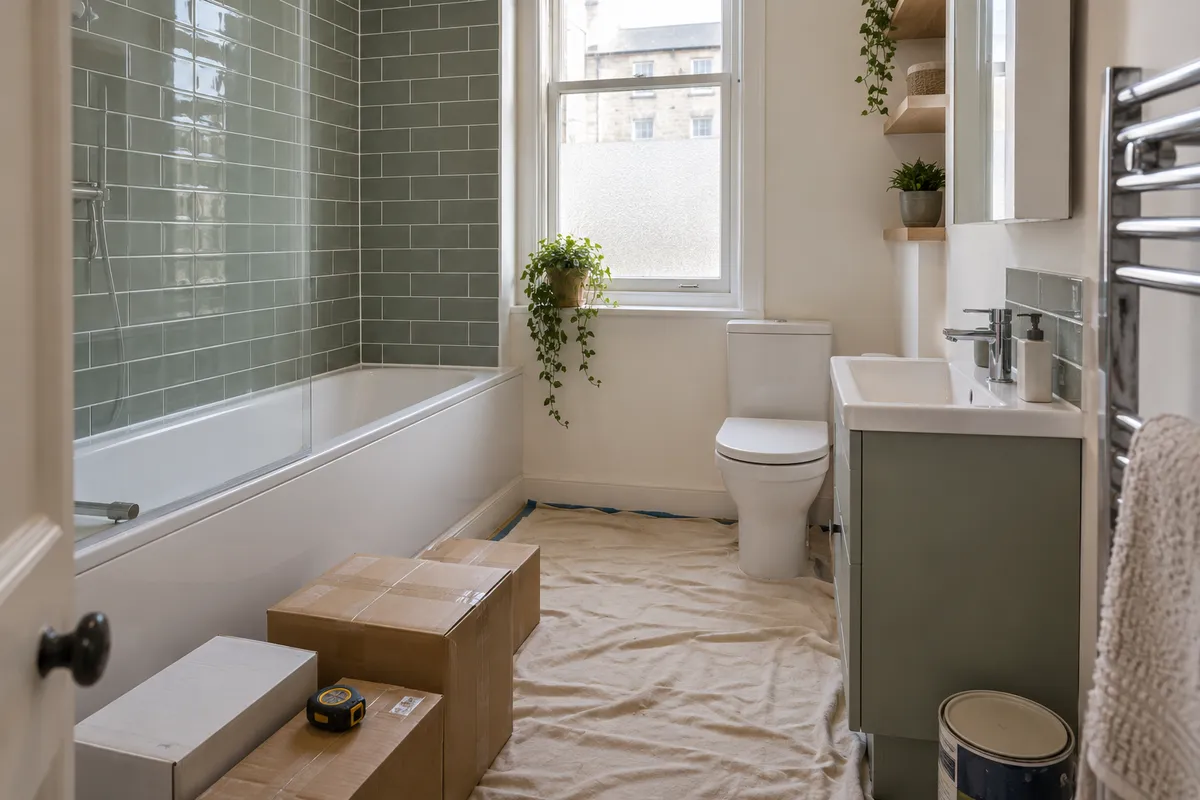
Services and preparation need to be coordinated before decorative finishes close the walls and floor. The installer should identify when pipework, electrical work, ventilation routes and supports are completed, and when relevant checks take place. Several trades may be involved, but their visits need to follow the actual dependencies of the room.
A change made late can require finished work to be reopened. Confirm the shower controls, mirror supply, lighting and storage positions at the appropriate stage. Our tenement renovation planning guide covers those decisions, while the quotation checklist helps ensure coordination and making good are represented in the scope.
Respect drying and curing requirements
Some materials need time before the next layer is applied or the shower can be used. The requirements depend on the specified products and site conditions, so there is no single drying period that fits every bathroom. Waterproofing, adhesives, grout and sealants should be used according to their current manufacturer instructions.
Ask which stages create waiting time in your programme and what conditions are needed during that period. A room that looks finished may still be unavailable for bathing. Keep children and pets out of the working area and follow the installer’s first-use instructions. Compressing those intervals to meet an arbitrary deadline can undermine the work you have paid for.
Plan fitting, checks and handover
The final fittings are followed by operational checks, cleaning and a walkthrough. Confirm the shower, taps, waste, ventilation, heating and any electrical controls are demonstrated as appropriate to the scope. The installer should explain how to access service points and which surfaces need particular care. Keep supplied manuals and relevant completion documentation together.
Record outstanding items clearly, including who will resolve them and the agreed arrangement. Practical completion and a final decorative touch may be different stages, but you should understand the distinction. Do not assume that removing the tools from the flat means every question about operation, care or unfinished work has already been answered.
Ask for a schedule you can use
A useful schedule shows the start conditions, main stages, likely facility interruptions and handover arrangements. Ask who your day-to-day contact will be and how changes will be communicated. If this is your only bathroom, read our guide to planning around bathroom downtime and agree a workable arrangement before committing to dates.
Our tenement bathroom renovation service can discuss the proposed work in your flat. Share your priorities, access details and any dates that matter to your household. A realistic programme should explain what is known and what still needs checking, rather than promising the same number of days for every bathroom across Scotland.
Guidance reviewed 7 October 2026. Technical and permission requirements depend on the property and proposed work; relevant guidance is linked in the article.