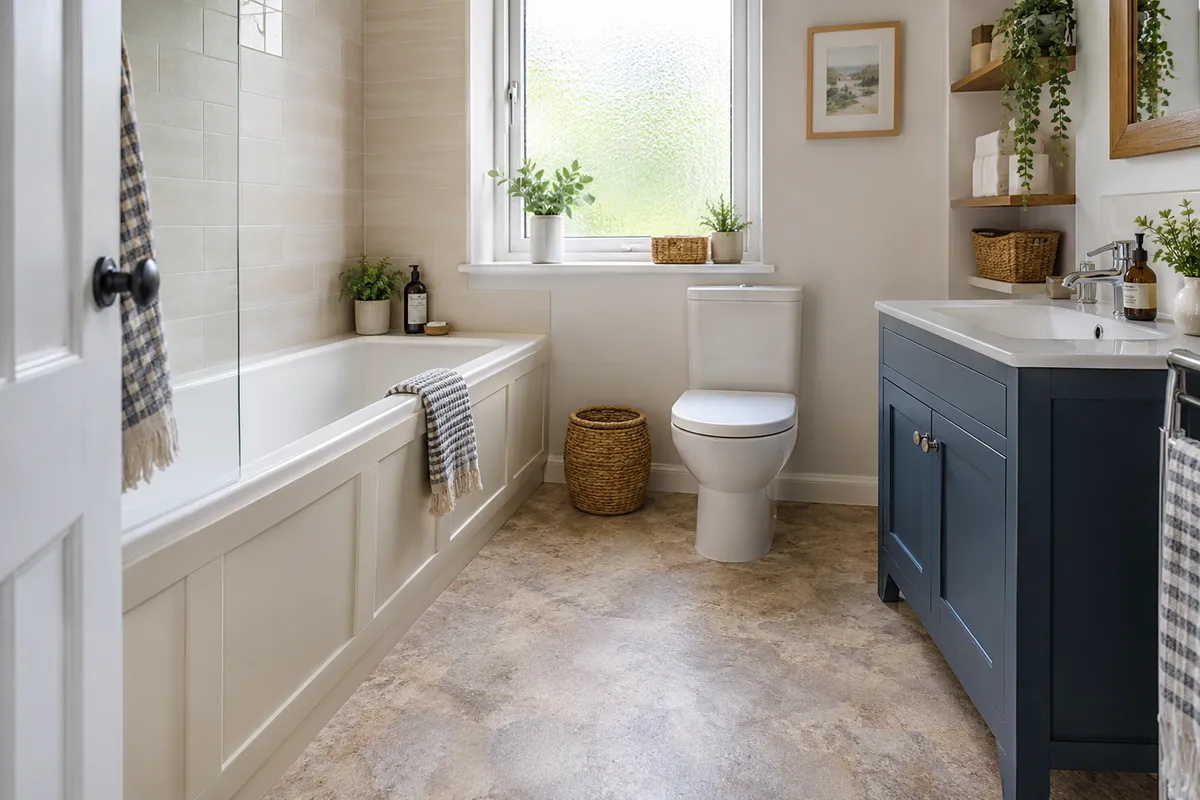
Bathroom flooring in an older Scottish flat needs to be chosen as a complete installation, from the existing base to the finished surface. The colour and pattern matter, but so do movement, moisture, floor height, cleaning and the doorway into the hall. A product described as waterproof does not establish that every joint and edge in the finished room is watertight. Begin with the condition of the floor, then compare finishes that suit the proposed bathing arrangement. This guide helps you discuss vinyl, tiles and preparation without assuming every tenement has the same construction.
Start with the floor underneath
Tell the installer about previous leaks, uneven areas or movement you have noticed. The existing covering can conceal repairs and changes, so a survey may leave some questions unresolved until removal. Ask what assessment is included and how unexpected findings will be reported before the next layer goes down.
The base needs to support the chosen finish and the room’s intended use. Loose boards or an unsuitable surface should not simply be hidden beneath an attractive new product. Where structural concerns arise, obtain the appropriate assessment rather than treating flooring adhesive or a thicker covering as a remedy. The quotation should separate ordinary preparation from repairs that cannot yet be defined.
Compare sheet vinyl and luxury vinyl tiles
Sheet vinyl and luxury vinyl tiles offer different installation and appearance options. A sheet can reduce the number of joints across the floor, while individual tiles or planks create a particular pattern and may use different fixing systems. Check the exact product’s suitability for the bathroom and the specified base rather than relying on the broad material name.
Ask how edges, thresholds and fittings will be finished and whether the product is suitable for the proposed wet area. A bathroom floor outside an enclosed shower is a different situation from a fully wet shower floor. Follow the manufacturer’s current requirements, including preparation and any compatibility conditions for underfloor heating. Product claims need to be read in the context of the whole installation.
Consider porcelain and ceramic tiles
Tiles can provide a durable finish with many sizes and textures, but an older timber floor needs a suitable preparation and fixing specification. Movement in the base can affect the finished surface. The chosen system should address the actual substrate, loads, transitions and wet-area requirements, not simply repeat a generic tiling recipe.
BAL’s guidance on tiling over timber illustrates why substrate assessment and compatible preparation matter. Your installer should use current instructions for the actual products chosen. Ask how tile setting-out will work around the toilet, doorway and shower so the result avoids unnecessary awkward cuts and remains maintainable.
Choose a surface for wet bare feet
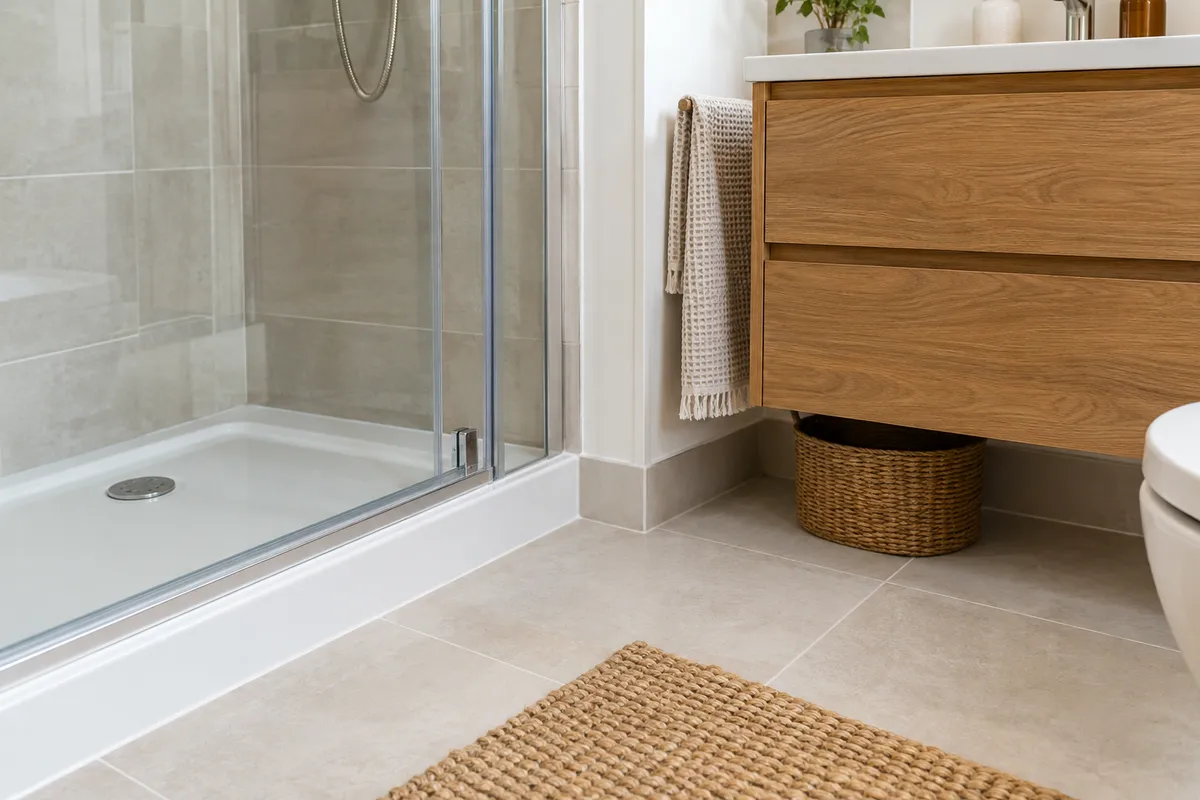
A bathroom floor needs to work when used by people with wet feet. Compare the product information for the intended location and discuss the users’ needs with the installer. A highly polished appearance is not, by itself, evidence of suitable performance, and the same finish can behave differently depending on water, contamination and maintenance.
Look at samples in the room’s light and feel the surface where possible. Consider cleaning: a heavily textured floor may need a different routine from a smoother one. Avoid assuming that an added mat solves every issue; loose edges or an unsuitable position can create their own obstruction. The overall layout should give people a clear route and a sensible dry place to stand.
Plan thresholds and floor height
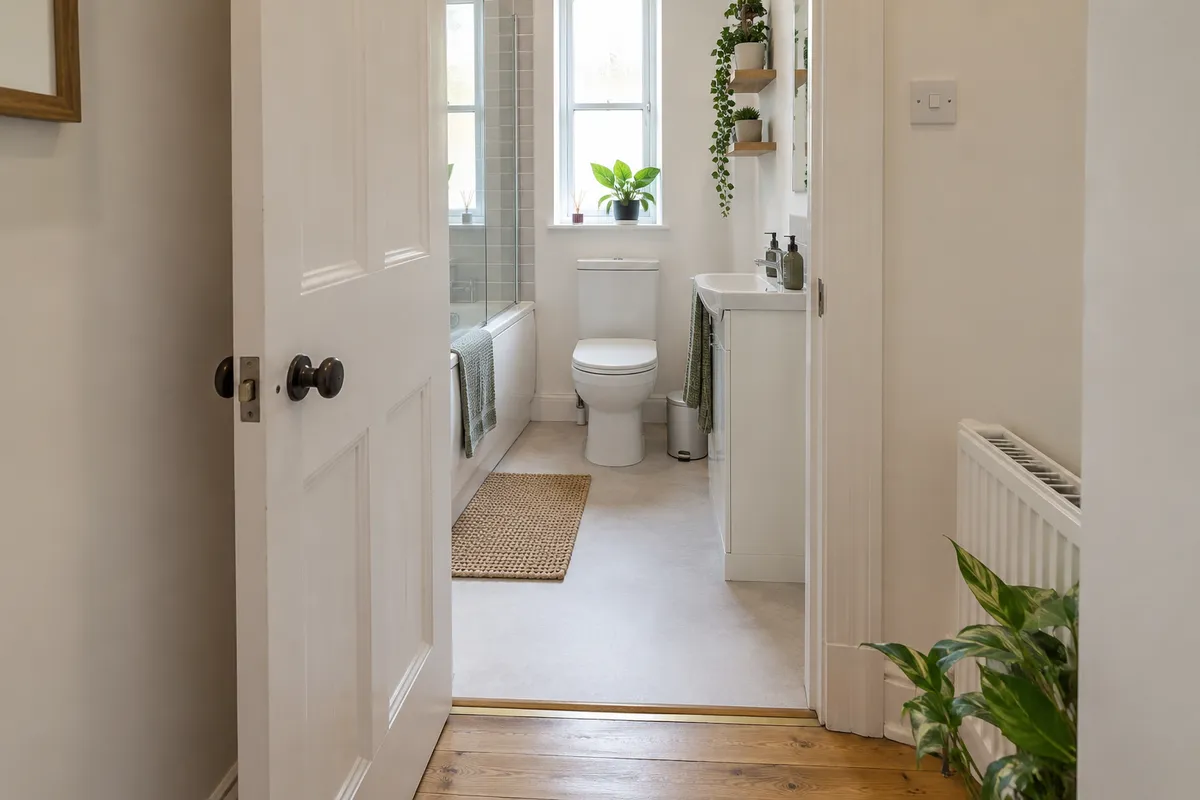
New preparation layers and finishes can raise the floor. Check the effect on the bathroom door, the hall threshold, the bath panel and any proposed shower entrance. A neat-looking transition in a product photograph does not establish what will happen when it is fitted over your existing floor structure.
Resolve the transition on the plan and include any associated joinery or making good in the quotation. If step-free movement is a priority, explain it before the floor system is selected. Our wet room versus shower tray guide explores how the shower entrance and bathroom floor interact when available depth is limited.
Coordinate flooring with waterproofing
Ask which parts of the room require waterproofing under the proposed design and how the floor meets walls, drains and other penetrations. Decorative tile, grout or a water-resistant surface should not be treated as a substitute for the required waterproofing assembly. Compatibility matters at the junctions as well as across the open floor.
This is especially relevant for a wet-room proposal. Our wet rooms in tenement flats guide explains the suitability questions. Keep the flooring decision connected to the drainage and screen arrangement, so the finish supports the way water will be contained rather than being chosen in isolation for its colour.
Ask for the complete floor specification
A useful specification identifies removal, assessment, preparation, the finish, compatible materials, edges and making good. Ask about curing or first-use requirements and obtain the care information for the installed products. Keep any spare material appropriately stored if agreed; it may help with a future repair, although matching later batches is not something to assume.
Our Scottish tenement bathroom renovation service brings flooring into the wider plan for your room. For coordinating finishes, read the wall panels and tiles comparison. A successful floor is one that suits the building, the shower arrangement and the household’s maintenance routine as well as looking right on completion day.
Guidance reviewed 7 October 2026. Technical and permission requirements depend on the property and proposed work; relevant guidance is linked in the article.