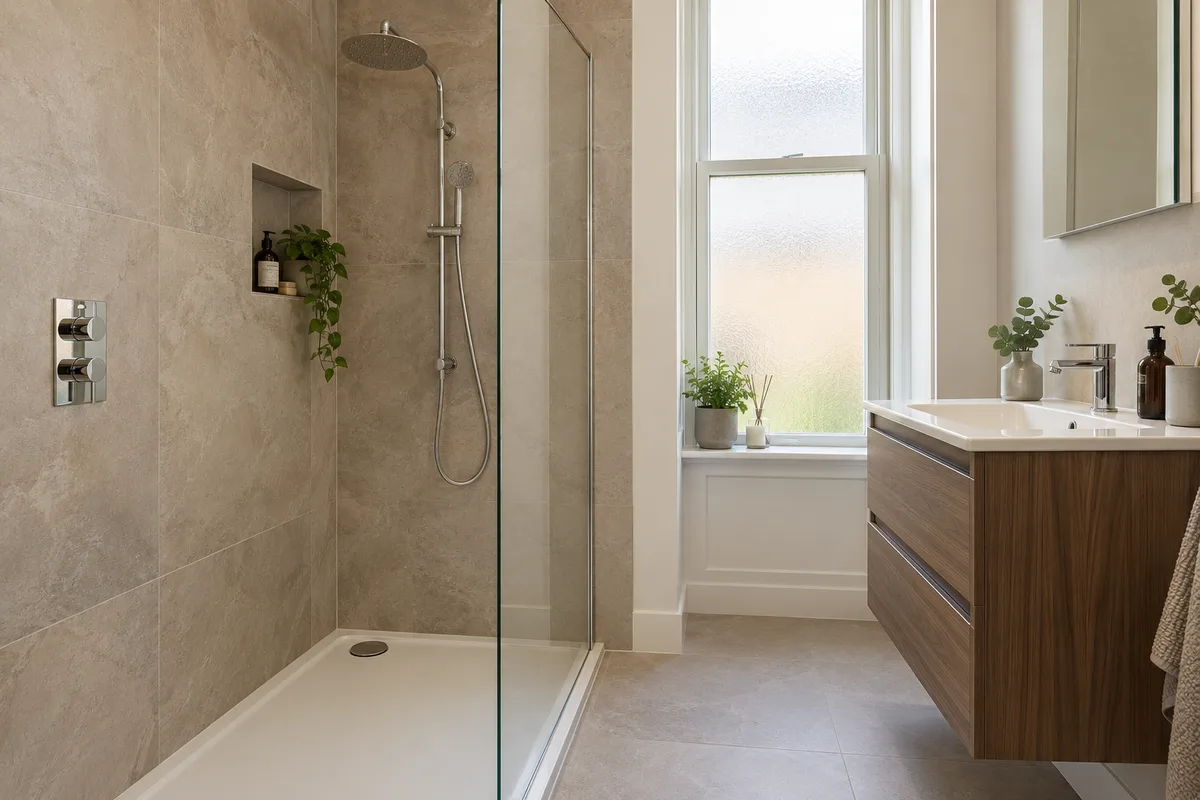
Bathroom wall panels and tiles can both create a smart, practical tenement bathroom. The better choice depends on the look you want, the shape and condition of the walls, the details around the shower and how you prefer to clean the room. Neither option removes the need for careful preparation. Start with our bathroom styles and finishes, then compare complete wall systems rather than judging a tile sample against a panel photograph.
Choose the effect you want in a small room
Look at the bathroom as a whole before choosing a surface. A tall, narrow room can feel busy when every wall has a strong pattern, several trim colours and contrasting fittings. You may prefer a quieter main finish with interest around the basin or shower. Alternatively, a simple tiled pattern can give the room character without changing the position of the main fittings.
View samples alongside the floor, vanity and tap finish. A colour that looks warm in a showroom may appear cooler under your bathroom lighting. Hold samples vertically, since walls and floors reflect light differently, and look at the scale of any pattern. Our guide to modern bathrooms with period character explores how contemporary finishes can sit comfortably with original joinery and proportions.
Where bathroom wall panels work well
Panels can create broad, visually calm surfaces with fewer joints than a layout of small individual tiles. This can appeal if you want a simple shower enclosure or prefer to spend less time attending to numerous grout lines. Panels still have joints, edges and seals, however. Their position and appearance should be included in the design, particularly where a joint will sit close to a shower valve or shelf.
Different products have different cores, finishes, joining systems and installation requirements. Ask to see the actual specification rather than treating every product described as a bathroom panel as interchangeable. Check whether the chosen range is suitable for the intended wet area and how corners and penetrations are detailed. Manufacturer instructions, such as the Multipanel installation guides, illustrate why the complete system matters; this is not a promise that any particular brand is included in your quotation.
Where tiles give you more flexibility
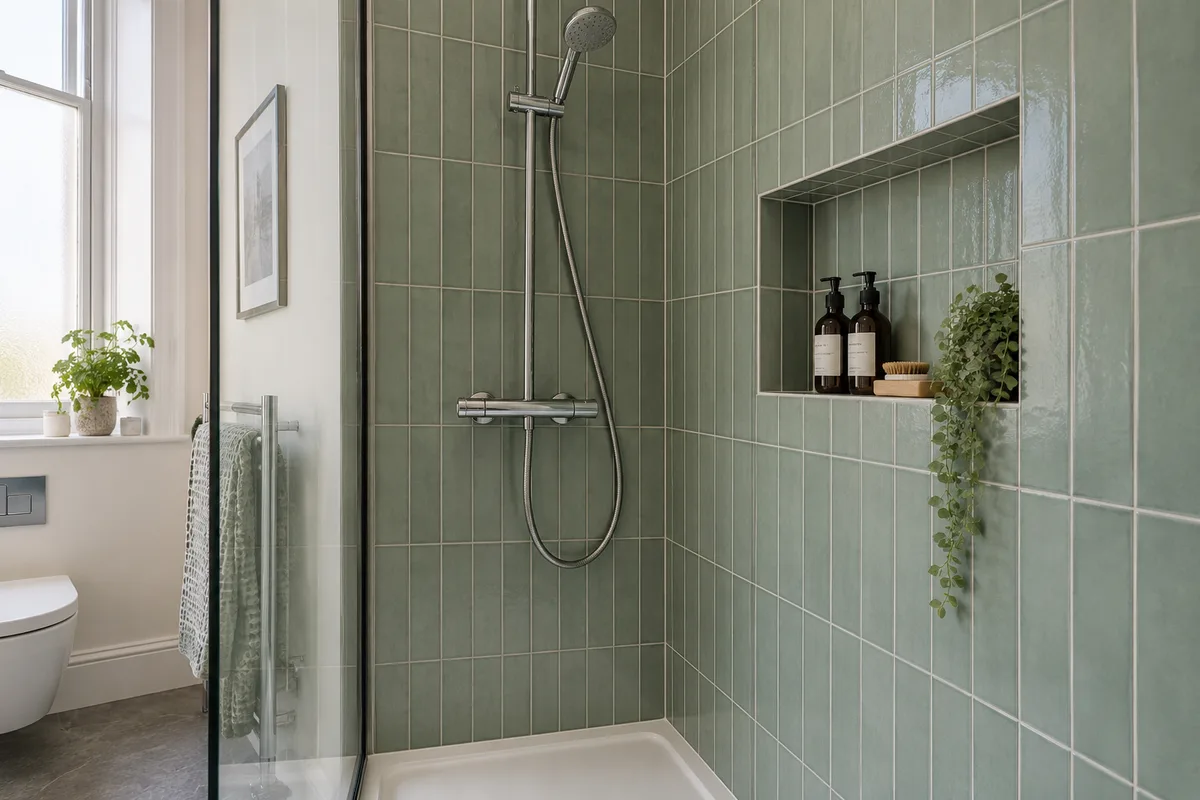
Tiles offer a wide choice of sizes, colours and laying patterns. They can be useful when you want a particular feature wall, a carefully proportioned splashback or a detailed finish around a niche. The grout colour influences the result as much as the tile itself. A close colour match creates a quieter surface, while contrast makes the pattern more prominent.
Plan the tile layout before installation, including where cuts will land around windows, the basin and the edges of the shower. A very large tile is not automatically the best choice for every compact room, especially where it produces awkward narrow cuts. Smaller tiles can follow some shapes more readily, but introduce more grout lines. Compare the finished arrangement and cleaning implications, rather than assuming one tile size always makes a room look bigger.
Look behind the decorative surface
The existing wall may need repair, levelling or another suitable preparation before either finish is installed. Covering an uneven or damaged surface does not resolve the underlying problem. Ask what the quotation allows for once the old finish is removed, how unexpected damage will be handled and whether any additional work requires agreement before proceeding. This is especially useful where previous alterations have left mixed surfaces around the room.
Water management needs to be specified as part of the installation. Tiles and grout alone should not be treated as the waterproofing system behind a shower; BAL's guidance on bathroom product selection explains the importance of suitable backgrounds and waterproofing. For panels, the manufacturer's requirements for substrates, joints, edges and sealants matter. Avoid mixing unrelated components on the assumption that every waterproof product forms a compatible system.
Plan corners, niches and transitions
A finish is judged close up at its edges. Ask how the shower wall meets the tray, what happens at internal corners and how the surface finishes beside a painted wall or window reveal. These details influence appearance, cleaning and future maintenance. Agree visible trim colours alongside the taps and screen frame so they look intentional rather than like additions made at the end.
Storage also affects the wall design. A recessed niche needs suitable construction and waterproof detailing, while a surface shelf has its own fixing and sealing requirements. Do not assume an existing wall can accept a recess. If a shallow cabinet or shelf meets your needs with less disruption, compare that option. Our small bathroom design options show why useful storage should be planned with the fittings, not squeezed into leftover space.
Compare the complete installed cost
The material price per square metre is only one part of the bill. Preparation, labour, trims, adhesives, waterproofing, sealants, waste and making good can all affect the installed total. A room with several corners and awkward reveals may need a different amount of work from a simple rectangular shower enclosure using the same product. Obtain a written specification so you know which surfaces and details are covered.
Ask about care instructions and what happens if a component needs attention later. Keep spare tiles where practical and record product names and colours; for panels, retain the range and fitting information. Neither finish should be sold as maintenance-free. Joints and seals need inspection, and cleaning products must suit the chosen surface. The bathroom cost guide can help you compare the wider renovation scope without losing sight of these details.
Make the finish work with the whole bathroom
Wall finishes cannot solve a ventilation problem or compensate for an awkward layout. If the room has no window or stays damp after use, read our windowless bathroom ventilation guide and include that question in the design discussion. Decide how the room will work before committing most of the budget to a decorative surface.
Bring your preferred colours, a few sample choices and a short explanation of your cleaning priorities to the conversation. Our bathroom styles and options provide a starting point for comparing panels, tiles, fittings and storage together. The aim is a finish you enjoy looking at, can look after comfortably and understand as part of a properly specified installation.
Guidance reviewed 6 October 2026. Technical and permission requirements depend on the property and proposed work; relevant guidance is linked in the article.