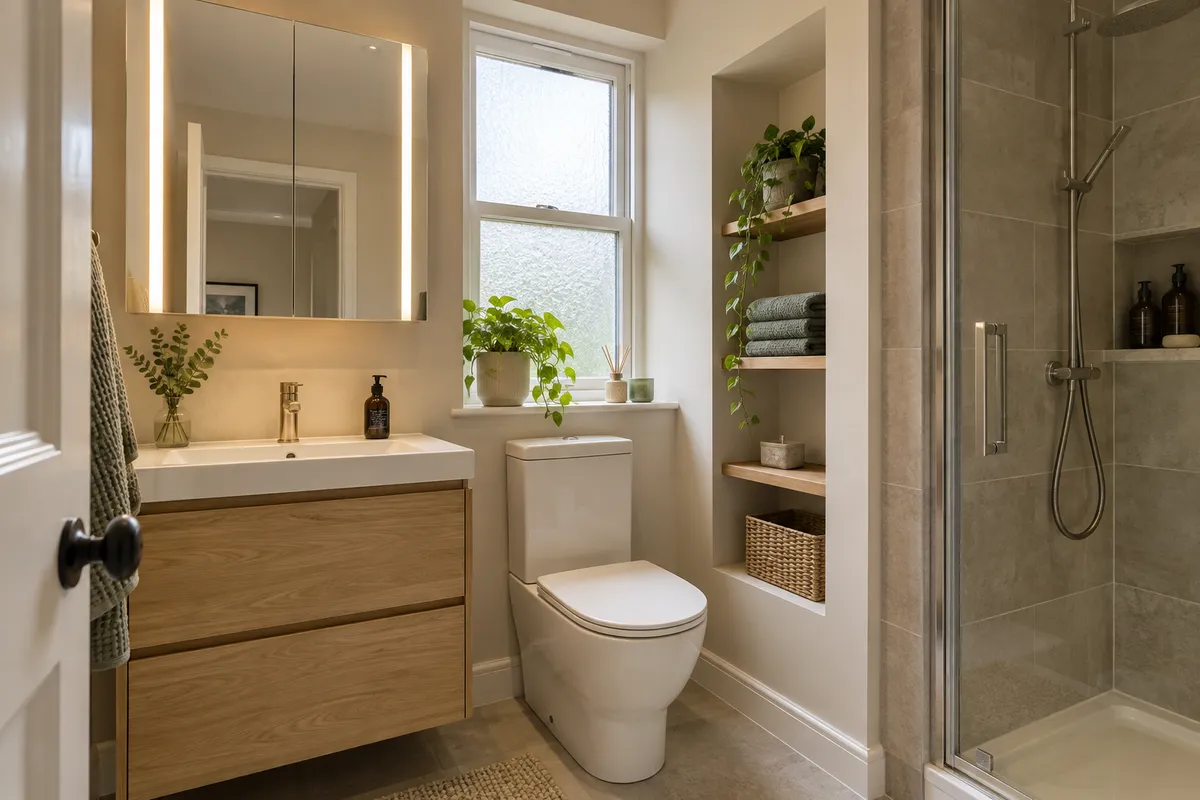
Small bathroom lighting works best when it helps you see comfortably at the basin, move safely through the room and use the shower without harsh glare. In a Scottish tenement flat, a tall window can provide welcome daylight but cannot replace useful lighting on a dark morning. An internal bathroom has a different starting point again. Plan the light and mirror together before choosing decorative fittings, and have electrical suitability assessed by a qualified professional. This guide focuses on the everyday decisions that make a compact room pleasant to use.
Light the basin before choosing decoration
Think about the tasks performed at the mirror: shaving, applying skincare, checking contact lenses or helping a child brush their teeth. A ceiling light behind your head can leave the face in shadow. Discuss a lighting arrangement that illuminates the basin area usefully without creating a bright source directly in your eyes.
Look at the mirror and fitting positions together. The effect changes with mirror size, mounting height and the surrounding finishes. If possible, see the proposed fitting working rather than choosing only from an unlit photograph. A decorative light may be attractive but still need another source to make the basin practical at the times you use it most.
Balance general and task lighting
General lighting helps you see the whole room, while task lighting supports particular activities. A modest bathroom may not need many fittings, but it should not rely on one glaring point of light to do every job. Consider the doorway, shower, basin and storage as a connected space rather than adding lights wherever a ceiling gap is available.
Bright glossy surfaces and glass can create reflections, so discuss glare as well as output. Choose the overall light appearance deliberately; mismatched lamps can make the room feel disjointed. There is no single colour temperature that suits every household. Compare a comfortable effect that works with the actual tiles, wall finish and mirror rather than relying only on a product label.
Choose a mirror to fit the room
A mirror should sit at a useful height and provide the view you need. A large mirror can make a room feel more open, but it should not cover required access or crowd the window and shower. Measure the complete fitting and check its projection, particularly where a narrow walkway passes in front of the basin.
A mirror cabinet combines reflection with storage, although its door movement needs room. Consider who uses it and what will be kept inside. The small bathroom storage guide explains how cabinets and vanity drawers can divide everyday items effectively. Good lighting makes that storage easier to use; extra mirror width alone does not solve an awkward layout.
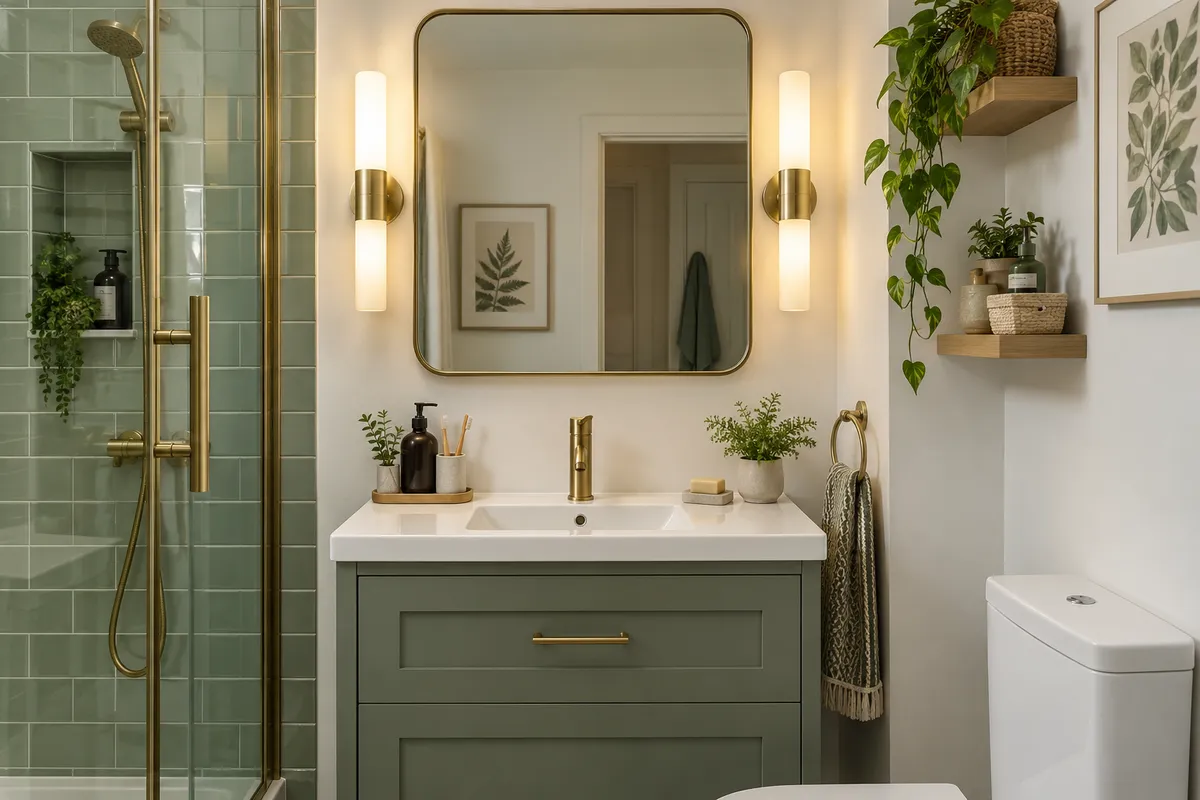
Help a windowless bathroom feel comfortable
In a windowless room, look for an even, welcoming result rather than trying to imitate bright sunlight with one powerful lamp. A lighter wall finish can support the overall appearance, but it should be combined with a considered lighting plan. Avoid leaving the shower noticeably darker than the basin or creating a harsh reflection in the glass.
Keep the room visually calm with useful storage and a restrained group of finishes. Lighting improves visibility and atmosphere; it does not replace ventilation. Our windowless tenement bathroom guide covers the extraction and service-route questions that need to be resolved alongside the visual design, before the walls and ceiling are finished.
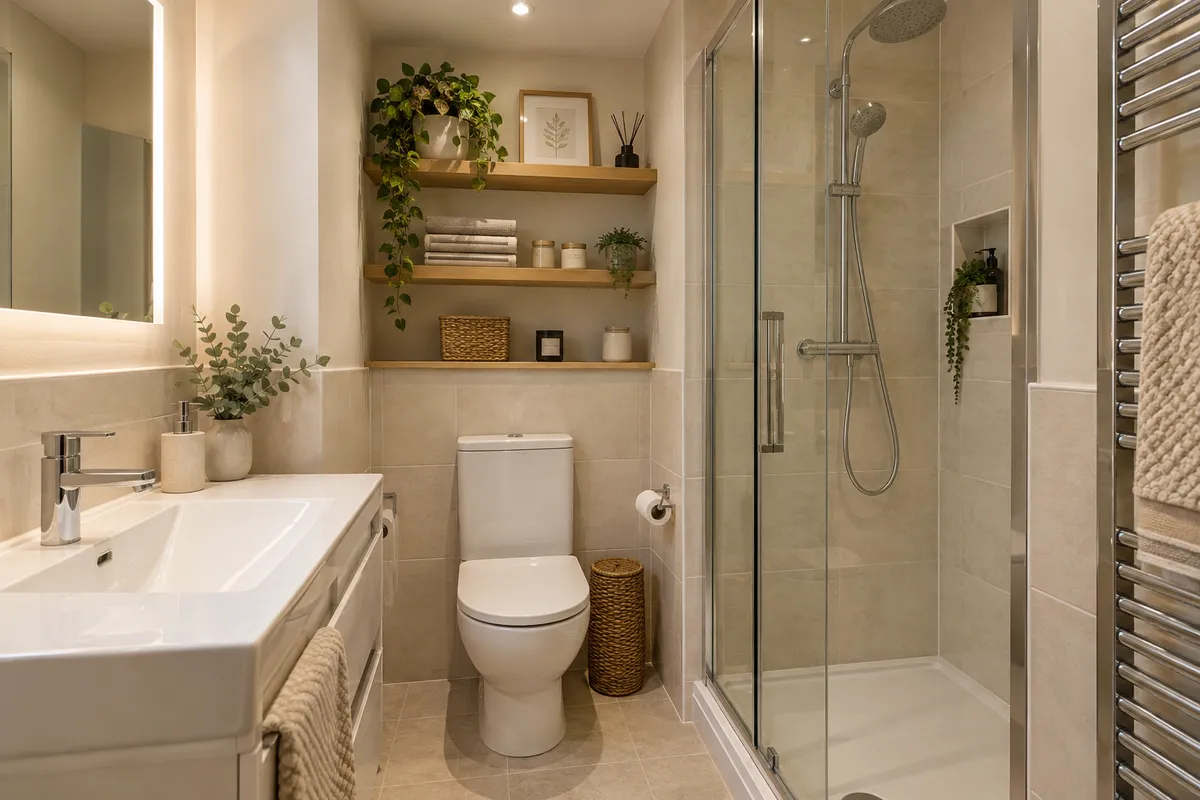
Plan safe positions and suitable fittings
Bathrooms require electrical fittings and installation arrangements appropriate to their locations. Have a qualified electrician assess the proposed positions, protection and controls. A light sold for a general interior is not automatically suitable beside a bath or shower, and a decorative preference should not determine a position before suitability has been checked.
Electrical Safety First’s bathroom guidance explains why water and electrical equipment require care. Do not bring extension leads or portable mains appliances into the room as a workaround for an incomplete lighting plan. The fixed installation should be specified and checked as part of the renovation, with relevant documentation retained.
Choose controls and useful maintenance access
Think about how the lighting will be operated when entering the room and when using the mirror. If separate lighting modes are proposed, make sure they offer a practical benefit rather than unnecessary complexity. Explain any difficulty reaching or using controls so it can be considered before wiring and mounting positions are agreed.
Ask how lamps, drivers, mirror components or other replaceable parts can be accessed later. An integrated fitting may have different maintenance arrangements from one with a replaceable lamp. Keep the model details and care instructions. Choose products you can clean safely and discuss any demister or charging feature before assuming its electrical work is included.
Review the room in daylight and after dark
Look at the finished design under the conditions in which you will use it. Check the mirror for distracting glare, the shower for shadows and the cupboards for visibility. At handover, ask for the controls to be demonstrated and record any issue before treating the room as complete. Small adjustments can matter more than adding another decorative fitting.
Our small bathroom service for Scottish tenements connects lighting and mirror choices with the layout and installation. Share photographs showing the current room by day and after dark, together with the problem you want to solve. That gives the design conversation a useful starting point rooted in your own bathroom rather than a brighter room in an inspiration photograph.
Guidance reviewed 7 October 2026. Technical and permission requirements depend on the property and proposed work; relevant guidance is linked in the article.