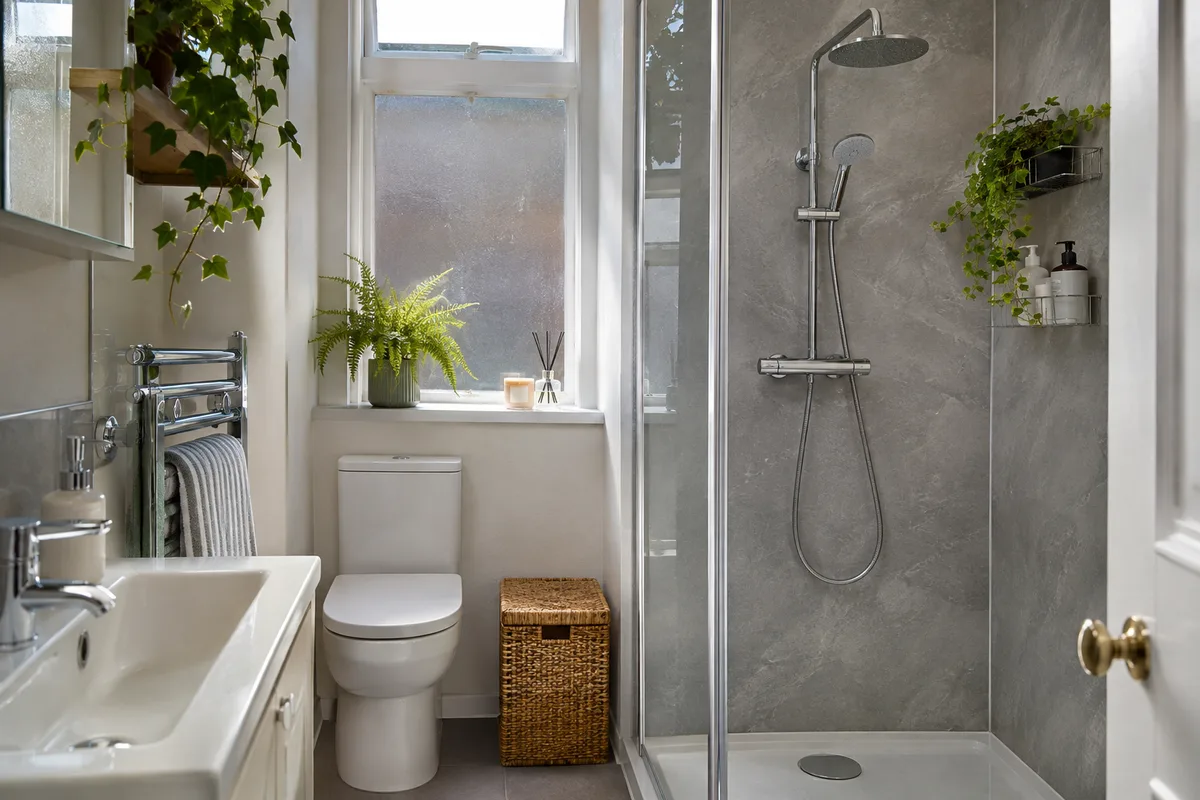
Choose a mixer shower if your hot water system gives steady pressure and you want a strong, consistent flow. Choose an electric shower if your system is weak, you have no hot water tank, or you want a shower that works on its own. Both can be a good choice in a tenement flat. The right one depends on what is behind your walls, not what looks best in a catalogue.
How each type heats the water
A mixer shower does not heat water itself, while an electric shower heats it as it passes through. A mixer blends hot and cold water from your home’s own supply. The hot water comes from your boiler, a combi or a cylinder, and the shower mixes it with cold to reach the temperature you set. It does not heat anything itself.
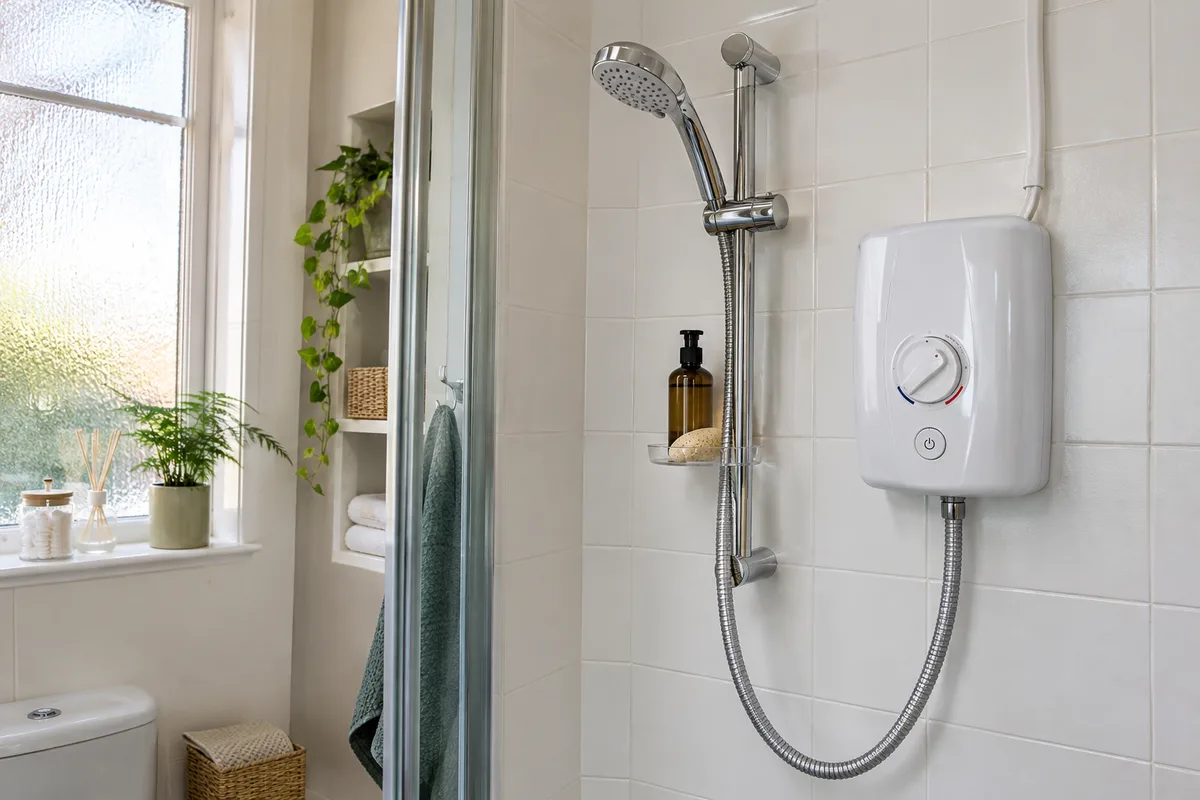
An electric shower takes cold water from the mains and heats it as it passes through the unit. It has its own heating element inside, a bit like a kettle. You turn it on, and it heats only the water you use.
That one difference drives everything else in this guide. A mixer relies on the rest of your heating and plumbing. An electric shower relies on the mains water pressure and a proper electrical supply.
What your boiler and water pressure allow
A mixer works best when hot and cold supplies arrive at similar pressure. If they are uneven, the temperature swings. A good thermostatic mixer copes with some imbalance, but it cannot invent pressure that is not there.
Electric showers need a steady mains supply. If the mains pressure is very low, the unit may not heat properly or may switch itself off for safety. It is worth checking before you buy anything.
Pressure is a common worry in older flats, and our guide on shower water pressure in a tenement explains how to test it and what the options are. Check the supply before you choose a shower.
Combi boilers, tanks and top-floor flats
With a combi boiler, hot water arrives at mains pressure. That suits a thermostatic mixer very well, as long as the boiler can deliver enough hot water for the flow you want. A combi can struggle if two taps run at once.
With a hot water tank in the loft or a cupboard, the water often arrives at low pressure and relies on gravity. A mixer on that system may need a pump to feel strong. An electric shower, fed from the mains, sidesteps the problem.
Top-floor flats tend to have the lowest pressure in the building, because the water has the furthest to rise. Our guide on top-floor tenement bathroom renovation covers this in more detail. An electric shower is often the sensible answer up there.
Flow, feel and running cost
A mixer shower usually gives a fuller, more even flow, and you can choose a rain head and a handset. It is the more flexible choice if you want a design you can build around.
An electric shower can feel thinner, because the unit can only heat so much water at a time. The flow is limited so the water stays warm. For many people that feels perfectly fine, and the water stays hot as long as you like.
Running cost is about what you pay for. A mixer uses hot water you have already heated, so the cost sits inside your boiler bill. An electric shower uses electricity directly. Neither is always cheaper, and it depends on your tariff and your habits. Do not expect guaranteed savings either way.
If you want a larger enclosure, our walk-in shower ideas for a small bathroom show what suits each type of valve. If you are looking for a walk-in shower quote in Paisley, Hamilton or Falkirk, ask for your system to be checked first, so the type suits it.
Electrical work an electric shower needs
An electric shower needs its own circuit from the consumer unit, a suitable cable and the right protection. It is not a plug-in job. The wiring must be sized for the unit and installed by a qualified electrician.
In a tenement, the cable run matters. Old flats can have limited space in the consumer unit and awkward routes through floors and walls. If the wiring is old, it may need upgrading before the shower can go in.
We are NICEIC registered, and electrical work should be certified to the proper standard. You can check what registration means on the NICEIC website. A new shower should never be wired up by guesswork.
Thermostatic control and safety
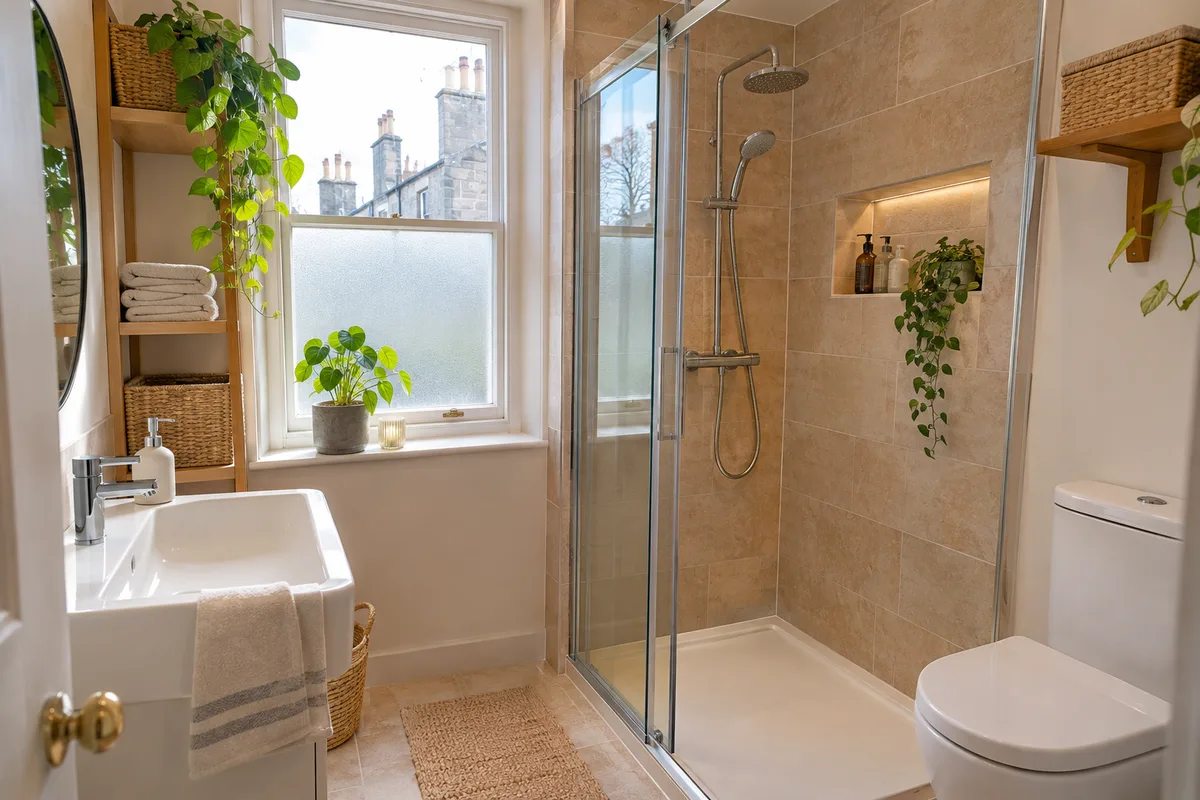
Whichever type you pick, a thermostatic valve is worth having. It holds the temperature steady, even when somebody flushes the toilet or runs a tap elsewhere. It also limits how hot the water can get, which is important for children and older people.
Many mixers are thermostatic by design. Good electric showers also control the temperature, though cheaper ones can vary more when the flow changes. Look for a model with a clear temperature setting and a safety cut-out.
Think about the controls too. Large, easy-to-turn handles are kinder to arthritic hands, and a clear display helps anyone who finds small dials hard to read. If you have a boiler, any work on it or on the hot water pipework should be done by a Gas Safe registered engineer.
Which to choose for your flat
Choose a thermostatic mixer if your system gives good, balanced pressure and you want the best flow and the widest choice of design. Choose an electric shower if you have low pressure, a gravity-fed tank or a top-floor flat, or if you want a simpler job with fewer changes to your plumbing.
If you are unsure, do not guess. Ask for the pressure to be checked first. A shower that is perfect on paper is no use if the flow is poor.
If you are swapping a bath for a shower, our guide to bath to shower conversion cost explains what affects the price. For the work itself, read our guide to bath to shower conversion in a tenement. If you are comparing walk-in shower options in Glasgow, Edinburgh or Dundee, we design, supply and install the whole room, so the valve, tray and screen are chosen together. Our bathrooms start from £3,995, with finance from £22 per week* subject to status.
Guidance reviewed 12 November 2026. Technical and permission requirements depend on the property and proposed work; relevant guidance is linked in the article.