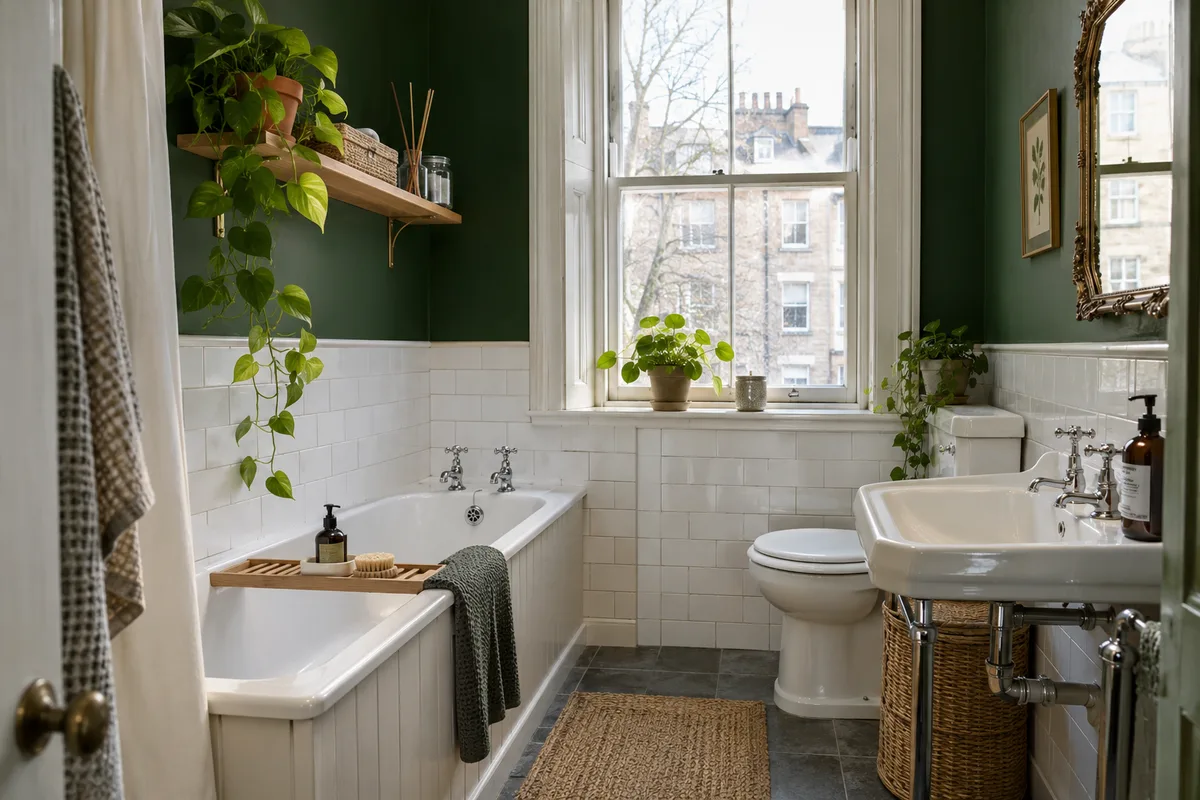
Victorian bathroom ideas suit tenement flats, because the building already has the proportions, the sash windows and the tall walls. The trick is to bring in the look without the draughts, the cold floors and the bulky fittings. Here is how we would choose a traditional suite for a compact room and keep it comfortable to use.
What makes a bathroom feel Victorian
The Victorian look comes from a few simple things. White ceramic, chrome or brass taps with cross-head or lever handles, tiles laid in a brick pattern, a framed mirror and a bath with a rolled edge or a painted panel. Colour goes on the upper wall, often a deep green, blue or red, with a pale tile below.
You do not need all of it. Three or four of these details are enough, because the more you add, the more it can feel like a theme and the less like a home. Choose the ones you will enjoy every day, such as a washstand basin and exposed taps, and keep the rest plain.
If you want a lighter mix of old and new, our guide to modern bathrooms with period character shows how to blend the two. You can also look through our bathroom styles to compare traditional and modern looks before you decide.
Traditional toilets: high, low and close-coupled
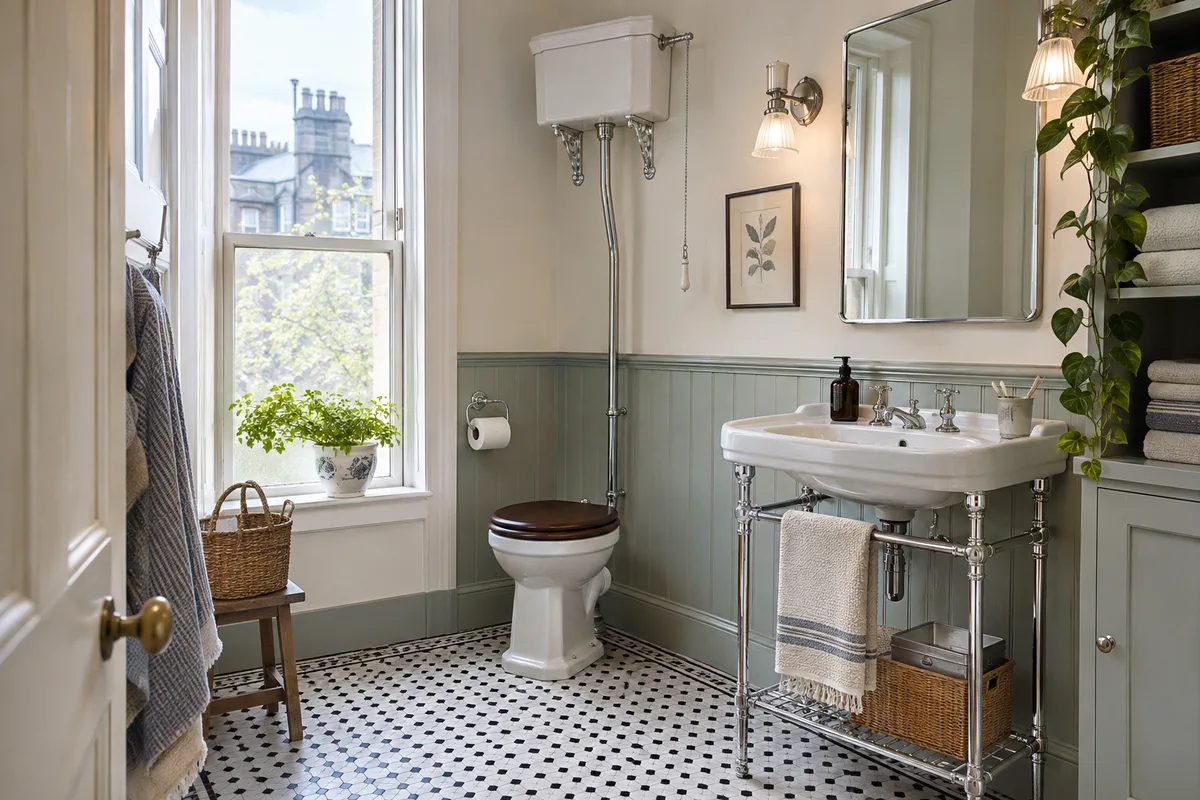
A high-level cistern fixed near the ceiling with a chain looks the part, but it needs a tall wall, a strong fixing and a pipe running down the wall. It can suit a high tenement ceiling, though the flush can be noisy and the pipe needs boxing or painting.
A low-level toilet has the cistern fixed lower on the wall, with a short pipe. A close-coupled toilet has the cistern sitting right on the pan. It is the easiest to fit and the most practical in a small room, and many close-coupled ranges are made with a traditional shape and a wooden or white seat.
For a compact bathroom, we usually suggest a close-coupled toilet with a short projection. It takes the least floor, it fits most existing soil connections and the look is still traditional. We would only choose a high-level cistern where the wall and the waste position suit it.
Basins on legs or washstands
A basin on a pedestal is the classic choice, but the pedestal hides the pipes and cuts down space for your legs. A basin on a washstand, made of chrome tubes or painted timber, looks lighter and shows more floor, which makes the room feel larger.
Small cloakroom-sized basins come in traditional shapes. Choose one with a taphole where you want the tap, and check that your hands fit under the tap. A shelf or a towel rail on the washstand holds what you use every day.
Plumbing is on show with a washstand, so we run it neatly and use matching chrome. Our guide to boxing in pipes in a tenement bathroom explains when to hide pipes and when to show them.
Baths: fitted, roll-top or panelled
A roll-top bath on feet looks the part, but it takes room round all sides and needs a strong floor. In most tenement bathrooms a fitted bath is the better answer. A panelled bath with a painted front, a traditional mixer tap and a rolled edge gives you the look without wasting space.
A shorter bath, or a bath with a shower over it, gives the family a shower and a soak. Our article on small bathroom ideas with a bath covers how to fit one into a tight room.
Check the weight of a cast iron or stone resin bath before you buy it. Older floors can need strengthening, and carrying a heavy bath up a tenement stair is not easy.
Metro tiles, dado rails and colour
Metro tiles are small, white and rectangular, laid in a brick pattern. A bevelled edge catches the light and gives depth. In a small room, tile to dado height, about a third of the way up the wall, or higher in the shower, and paint above.
A dado rail or a tile border marks the change. Paint above it in a deep colour, and use a bathroom-grade paint so steam does not mark it. A black and white mosaic floor is a Victorian favourite, but it can feel cold underfoot. Underfloor heating and a rug help.
If your ceiling is high, the colour above the tiles can carry up to the cornice. Do check the plaster first, as old walls may need repair before they take paint. The condition of the walls is covered in our guide to lath and plaster bathroom walls.
Taps, valves and the right metal finish
Choose one metal and keep to it. Chrome is easy to clean and goes with white ceramics. Brushed brass or nickel gives a warmer, softer look but can show marks more. Black is a modern choice that suits some period rooms.
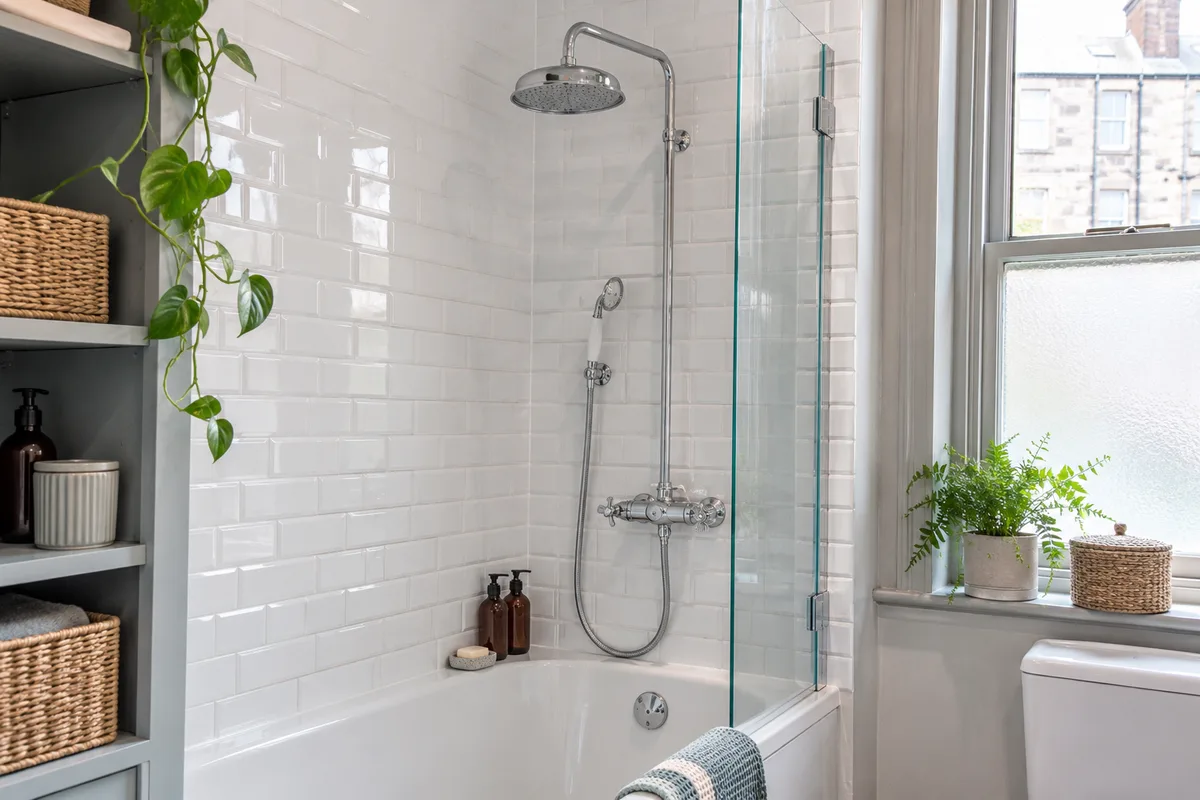
An exposed thermostatic shower valve with a large round head looks traditional, yet it works like a modern shower. It keeps the temperature steady and gives the shower a period feel. Match taps, valve, rail and toilet handle so that the room hangs together.
Keeping it practical for daily life
Traditional rooms can get cold and hard to clean if they are not planned well. Fit a heated towel rail or a traditional radiator, and see our guide to heating a small tenement bathroom. Use grout that wipes clean, and avoid fussy details that collect dust.
If your flat is listed or in a conservation area, check what you can change before you buy a thing, as the rules can affect windows and some alterations. Our guide to a listed tenement bathroom renovation sets out what to ask your council.
For a traditional bathroom designed to fit your room, call us or ask for a free quote.
Guidance reviewed 14 November 2026. Technical and permission requirements depend on the property and proposed work; relevant guidance is linked in the article.