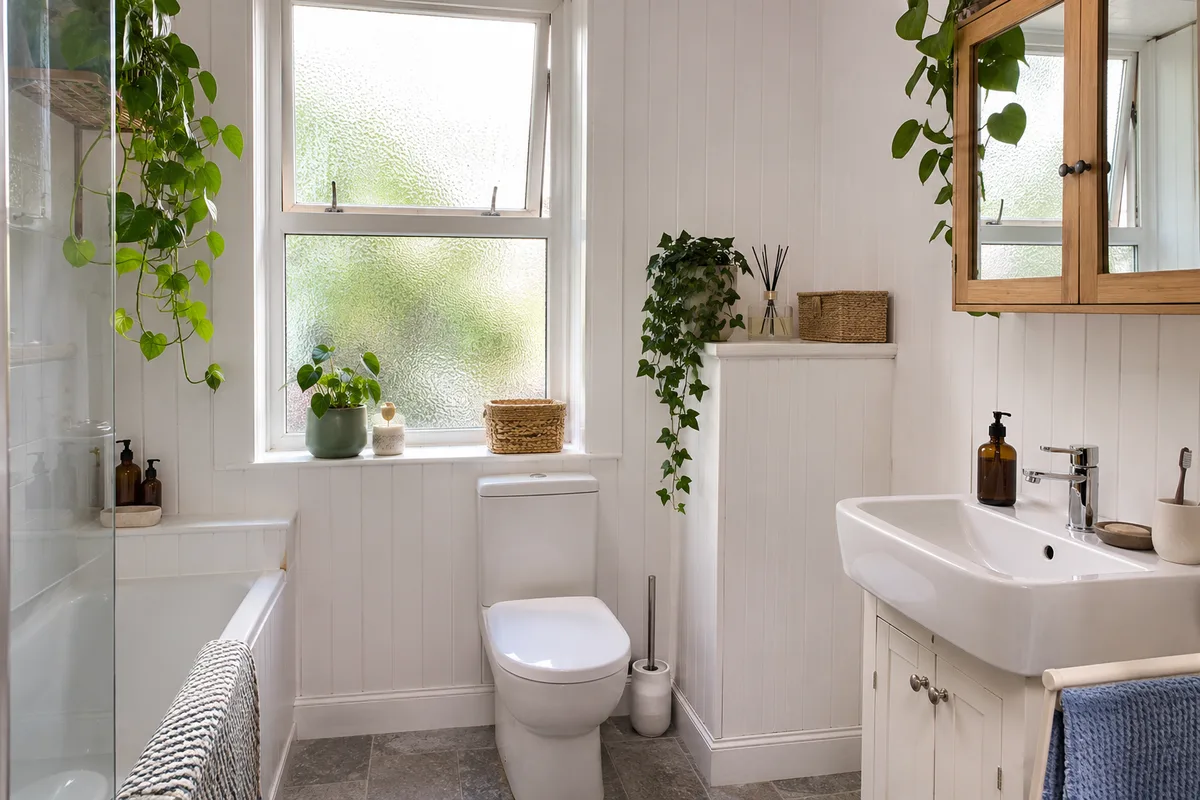
You can box in most of the visible pipes in a tenement bathroom, and done well it looks like part of the room. The rule is simple. Hide the pipes, but never lose access to the valves and joints. Here is how to plan boxing so it looks tidy now and still lets a plumber in later.
Which pipes you can box and which you cannot touch
Pipes serving only your flat are yours to box. That usually means the hot and cold supplies to your basin, bath or shower and toilet, and the waste pipes that run from them. These can be hidden behind a neat casing.
The soil stack is different. In a tenement the main stack often serves several flats and runs through the building. You can box around it, but you cannot move it, cut it or block it in so tightly that nobody can reach it. Shared pipes belong to the building, so ask your factor or check your title deeds if you are unsure.
Gas pipes need special care. Any gas pipework, or a boiler flue, should be handled by a Gas Safe registered engineer, and it must not be sealed in without the right ventilation and access. You can check an engineer on the Gas Safe Register.
Keep access panels where the valves and joints are
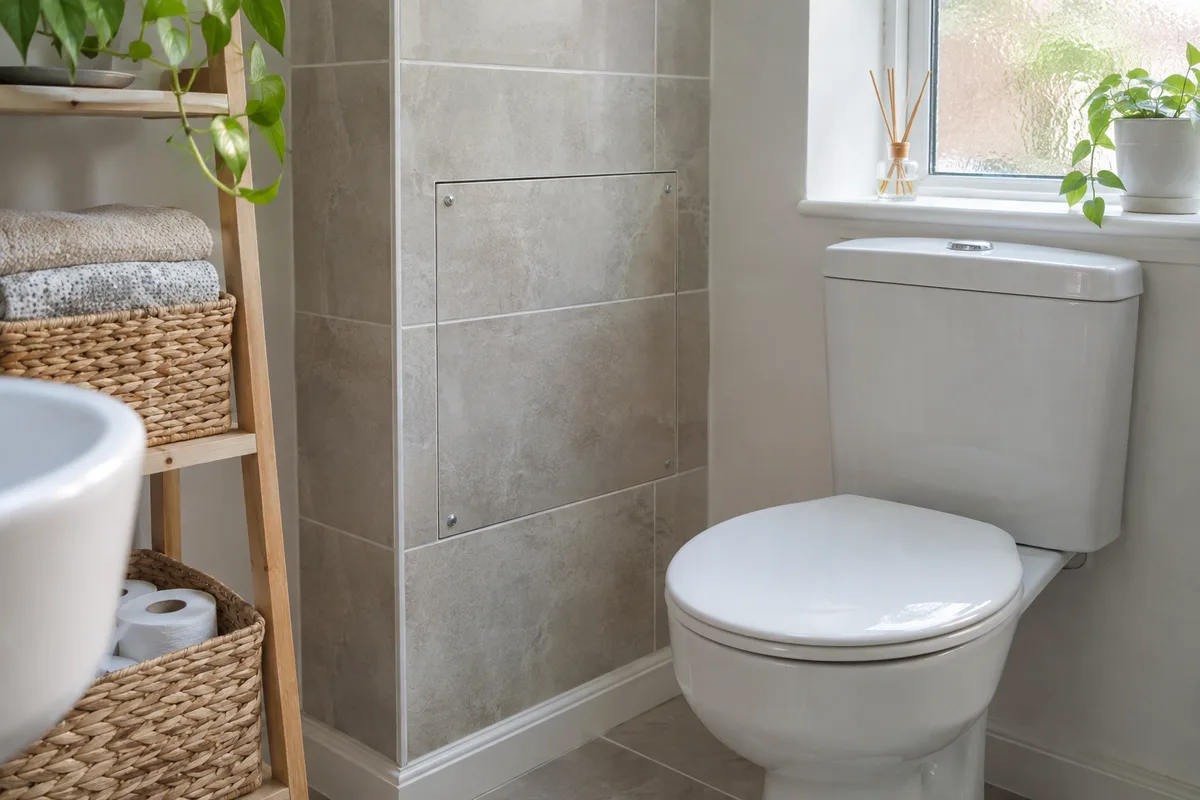
Put an access panel at every valve and joint, because a leak can start at a joint and you will want to reach a valve in a hurry. Hide them behind a sealed wall and you may have to smash tiles to fix a drip.
Good places for a panel include the valves under the basin, the shower valve and the connections at the toilet. A removable panel can be finished to match the wall, with a discreet edge or a magnetic catch.
In a tenement, a leak goes into the flat below, so access matters more. Our guide on a leak into the flat below explains why a quick isolation can save a ceiling.
Turn boxing into a shelf or a ledge
Boxing does not have to be a dead lump on the wall. A box that runs across the back of the toilet can have a wide top, which gives you a shelf for a plant, a candle or the toilet roll. A boxed corner can hold a small recess.
In a narrow room, a ledge at shoulder height is useful, because it keeps shampoo and bottles off the bath edge. A deeper box can take a niche for the shower, so the shelf is built into the same structure.
For more ideas on using small spaces well, see our guide to small bathroom storage cabinets and the older piece on small tenement bathroom storage. A well-planned box often gives you storage you did not have before. If you want it designed in from the start, ask for a tenement bathroom renovation quote in Dundee, Perth or Dunfermline.
Read our guide to tenement soil stacks and shared waste pipes.
Box with the same finish as the wall
Box in the same finish as the wall, so you barely notice it. If the walls are tiled, tile the box in the same tile. If they are panelled, use the same panel. If they are painted, paint the box in the same colour.
A box in a contrasting finish looks like a patch, and it shows every pipe it hides. A matching finish makes it read as part of the architecture. The edges matter too, so keep corners square and joints neat.
If you are choosing between finishes, our piece on wall panels or tiles in a tenement can help. Waterproof panels are quick to box in and have few joints to seal.
Half-height boxing behind the toilet and basin
A half-height box is often enough, so you do not need to box to the ceiling. Around the height of a standard cistern or basin, it covers the pipes where they come out of the wall and leaves the rest of the wall clear.
This works well behind the toilet, where the supply and waste enter low. It makes the room feel more open because the wall above stays visible. The top becomes a useful shelf.
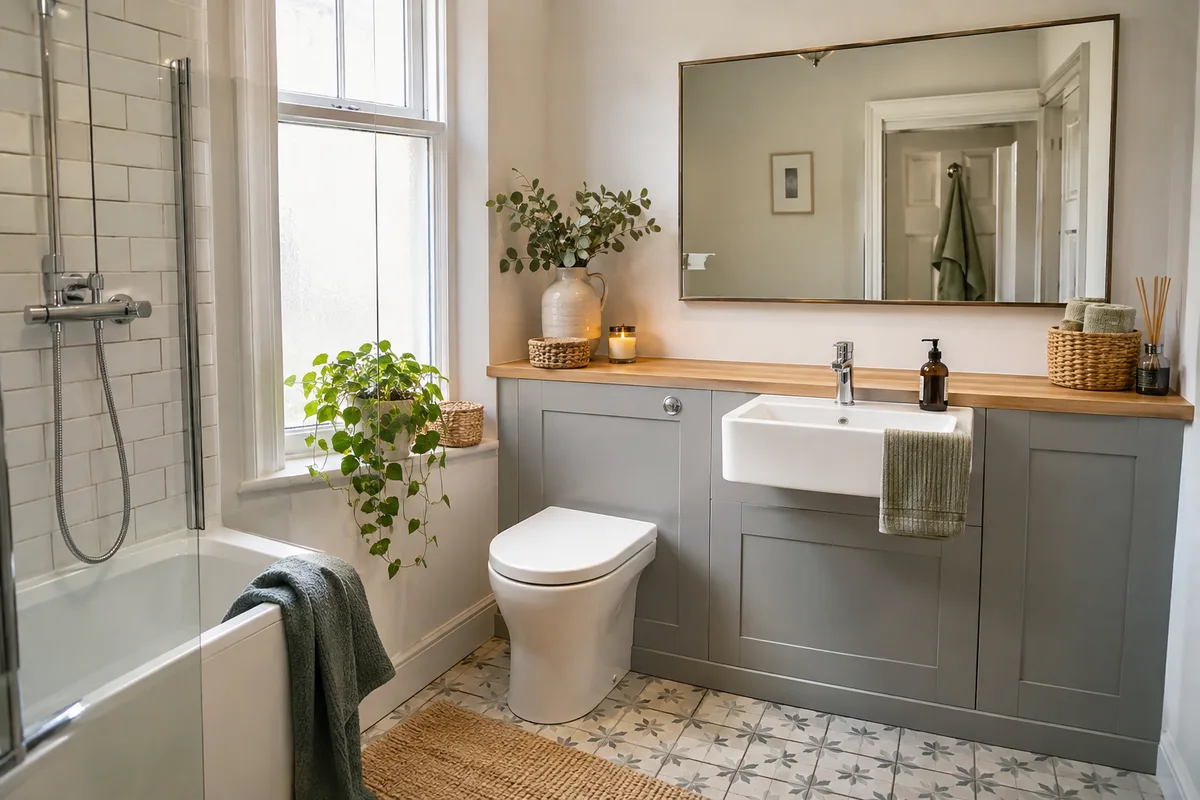
Behind a basin, a half-height box can hide the waste and supply and give you a neat top to stand a mirror or small items on. If you are thinking about the toilet type as well, read our wall-hung or floor-standing toilet guide, because a frame changes how the wall is built.
Sound, insulation and the pipe behind the box
Add sound and pipe insulation inside the box, because it is your chance to look after the pipe. Waste pipes can be noisy when water runs through them, especially in a flat with neighbours above and below. Wrapping the pipe in sound insulation inside the box can cut the sound.
Hot and cold pipes can be insulated too. Insulating helps with heat loss and reduces condensation on cold pipes, which can drip into the casing. In an older tenement with cold walls, that detail is worth getting right.
Leave a small gap and use sensible fixings, so the pipe is not tight against the board and can expand slightly. A pipe pressed hard against a hard surface can knock. If you are moving a toilet, our guide on moving a toilet in a tenement bathroom explains how the new waste route affects boxing.
Agreeing the boxing on the plan before fitting
Agree the boxing on the plan before anything is fitted, because it takes a few centimetres on each side. In a narrow bathroom that depth matters, and it can change where the toilet or basin sits.
The plan should show where each box goes, how deep it is, where the access panels sit and what finish it has. You then see the shelf, the panel and the sizes before the work starts. It avoids surprises on the day.
If you are looking for a tenement bathroom quote in Glasgow, Kirkcaldy or Ayr, ask for the boxing to be shown on your plan. We design, supply and install the whole room, and our bathrooms start from £3,995, with finance from £22 per week* subject to status.
Guidance reviewed 12 November 2026. Technical and permission requirements depend on the property and proposed work; relevant guidance is linked in the article.