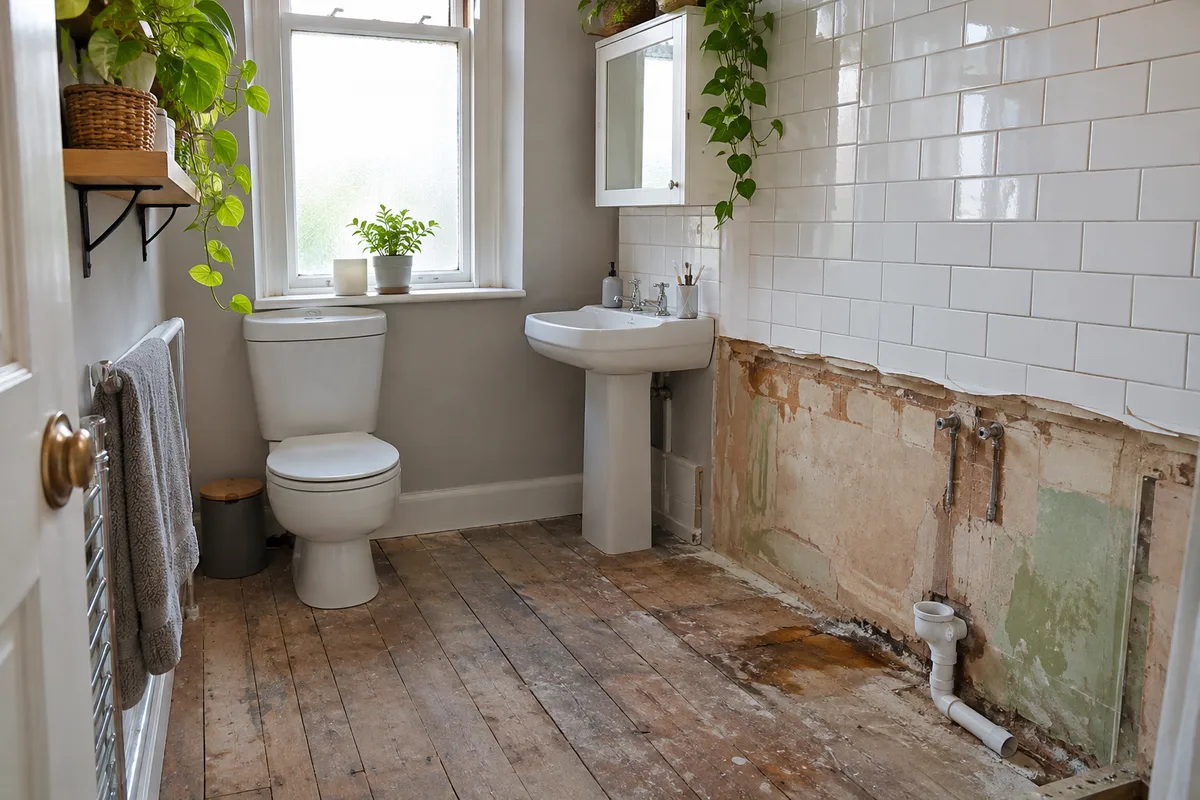
If your bathroom is leaking into the flat below, stop using the water that is causing it, tell your neighbour you are dealing with it, and call your insurer. Then find the source before anyone paints over the stain. A leak between flats is stressful, but it is a common problem in older buildings and it can be fixed properly.
First steps when a neighbour reports a leak
Go and see the damage with your neighbour if they are happy for you to do so. Take photographs and note where the stain or drip is. That helps you find the source and it helps with any insurance claim.
Stop using whatever you think is responsible. If a shower or bath is the likely cause, do not use it until it has been checked. If water is actively pouring through, turn off your water at the stopcock and ask a plumber to attend straight away.
Call your home insurer early. Many policies have an emergency number, and some insurers send their own tradesperson. Be polite and calm with your neighbour. A helpful first response makes everything that follows easier.
Finding where the water is actually coming from
The stain below is often not directly under the leak. Water travels along joists, pipes and lath before it drips. A wet patch in one corner can come from a source a metre or more away.
A plumber will start with the obvious places. They check the visible pipes, the taps, the toilet connections, the bath and shower, and the seals. They may run each fitting in turn and see when the leak appears. A moisture meter helps to map the wet area, and sometimes a camera reaches into places you cannot see.
Be patient with this step. A guess leads to the wrong repair, and the leak comes back. It is worth paying for a proper diagnosis.
Common culprits: bath seals, shower trays and waste pipes
The most common cause is a failed seal. The sealant between a bath or shower and the wall breaks down over time, and water runs behind the tiles and into the floor. You may not notice it for months.
Shower trays are another usual suspect. A tray that has moved slightly, a cracked tray or a poorly sealed waste can leak with every shower. The waste pipe under a bath or tray can also have a loose joint.
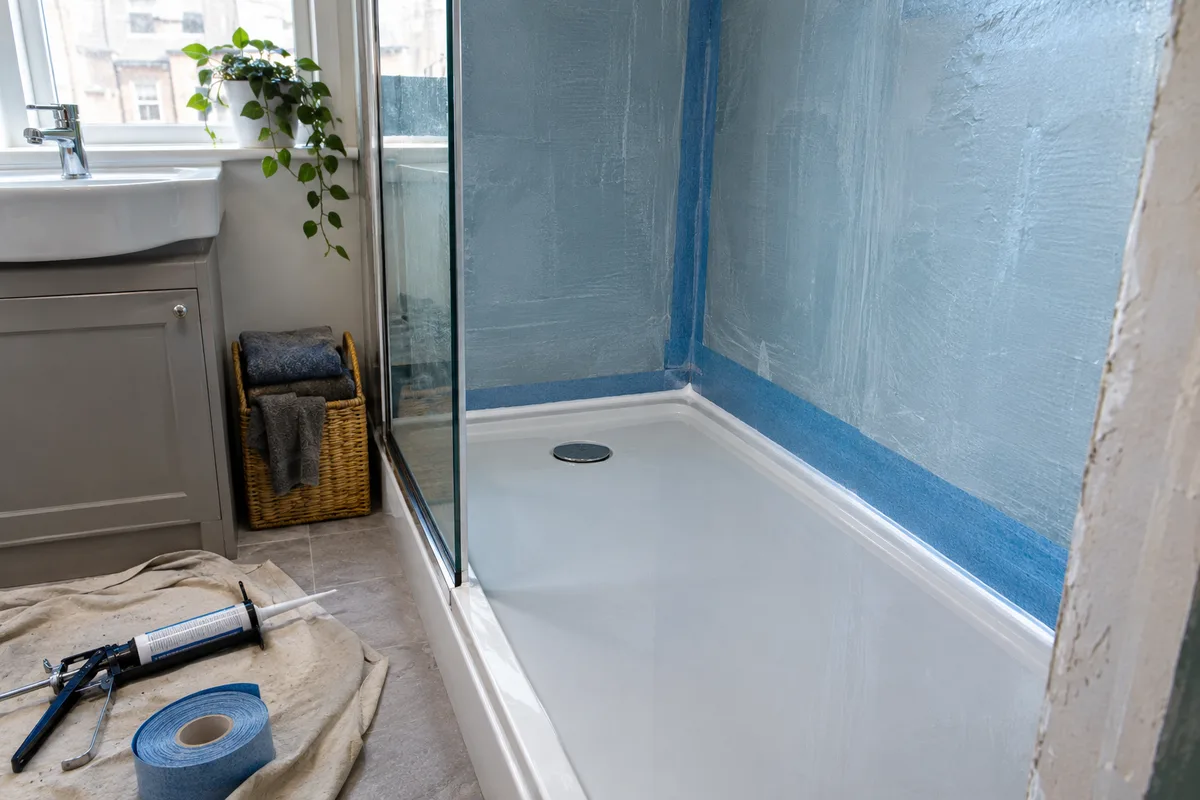
Old tiles and grout let moisture through, too. Grout is not waterproof on its own, and in a tenement the water has an easy route into a timber floor. Our guide on bath to shower conversion in a tenement explains how a tray and its surround should be waterproofed.
Who pays: your flat, the common parts and insurance
Usually, the owner of the flat where the leak starts is responsible for pipes and fittings that serve only that flat. Pipes that serve several flats are normally shared, and your title deeds will say who owns and maintains what. The Tenement (Scotland) Act 2004 also sets default rules for common parts.
Home insurance often covers sudden damage to your neighbour’s property, and your neighbour’s insurance may cover their ceiling. Policies differ, so read yours or ask your insurer. Some exclude gradual leaks or require you to prove the cause.
For free advice on shared repairs and responsibility, Under One Roof is a useful place to start. If the facts are unclear, a solicitor or Citizens Advice can help. We do not give legal advice, and your deeds are the final word.
Why a leak often means the floor needs looking at
When water has been getting into a floor for a while, the boards and joists can be damp or soft. Patching a seal does not repair the wood underneath. If the timber stays wet, rot can set in.
That is why a leak is often the moment to look at the whole floor. The boards should be checked for movement, softness and staining, then dried and kept or replaced. If you are looking for a tenement bathroom quote in Glasgow, Clydebank or Rutherglen, ask for that floor check to be part of the survey. Our guide on bathroom flooring in older flats explains what a sound floor looks like.
Damp left alone can also lead to mould, which we cover in damp and mould in a small bathroom. Dealing with the cause now saves a bigger repair later.
Tanking, trays and waterproofing in the new bathroom
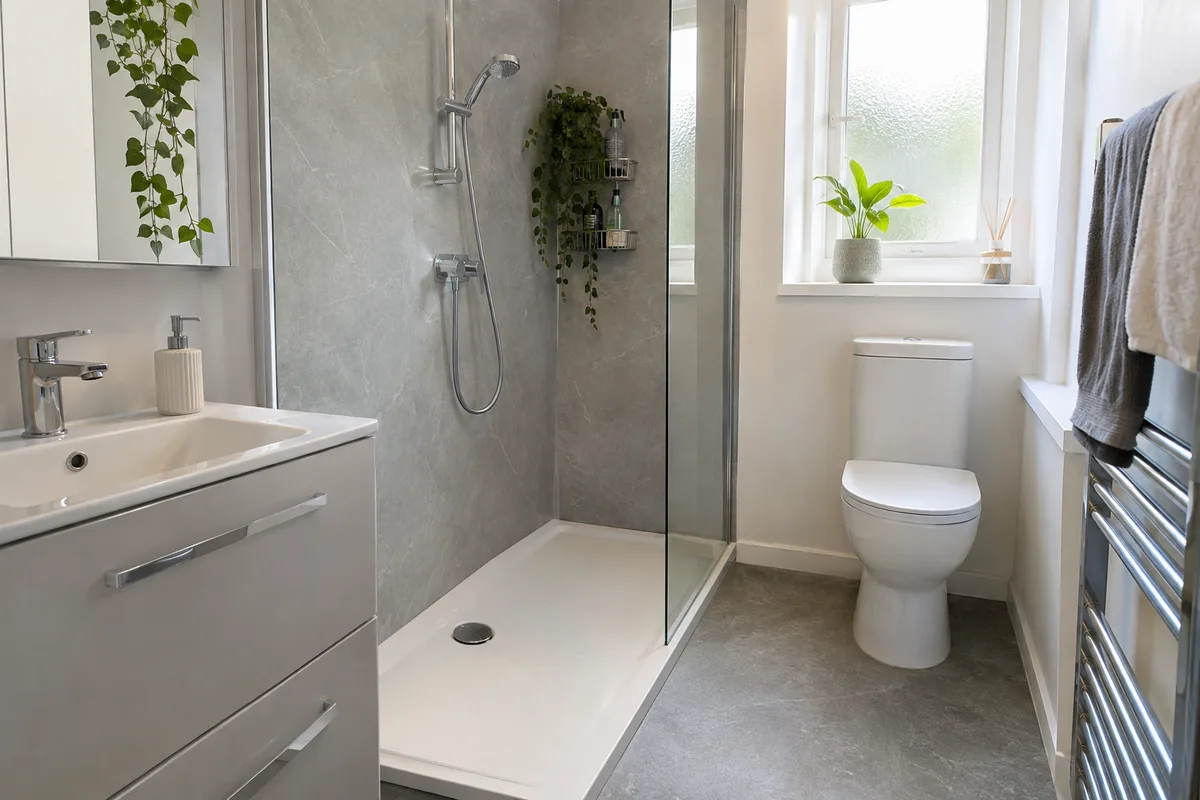
Tanking, a level tray and careful sealing stop a leak coming back in a refitted bathroom. A modern shower area is waterproofed behind the tiles, not just sealed on the surface. That layer, often called tanking, keeps water out of the wall and floor even if the grout cracks.
The tray or wet floor needs to be fitted level, with correct falls and a waste that can be reached for servicing. The joints between the tray, wall and floor are sealed carefully. A shower should be watertight by design, not by sealant alone.
Check the floor, the waste and the shower area before pricing the work, so a new finish never covers an old problem.
Telling your neighbour and your factor what is happening
Tell your neighbour and your factor what is happening as soon as you know. Tell them when a plumber is coming, what has been found and what is being done. A short message avoids a lot of worry.
If your building has a factor, let them know too, especially if the leak involves a shared pipe or the common stack. They can tell you who is responsible and may need to arrange access to other flats.
Keep copies of messages, quotes, invoices and photographs. If you are planning a new bathroom, our guide on tenement bathroom renovation permissions explains what to check. If you would like the whole room put right, ask for a full bathroom renovation quote in Paisley, Motherwell or Stirling. When the repair is done, ask your plumber for a written note of what was found, and share it with your neighbour so they know the problem is solved.
Guidance reviewed 12 November 2026. Technical and permission requirements depend on the property and proposed work; relevant guidance is linked in the article.