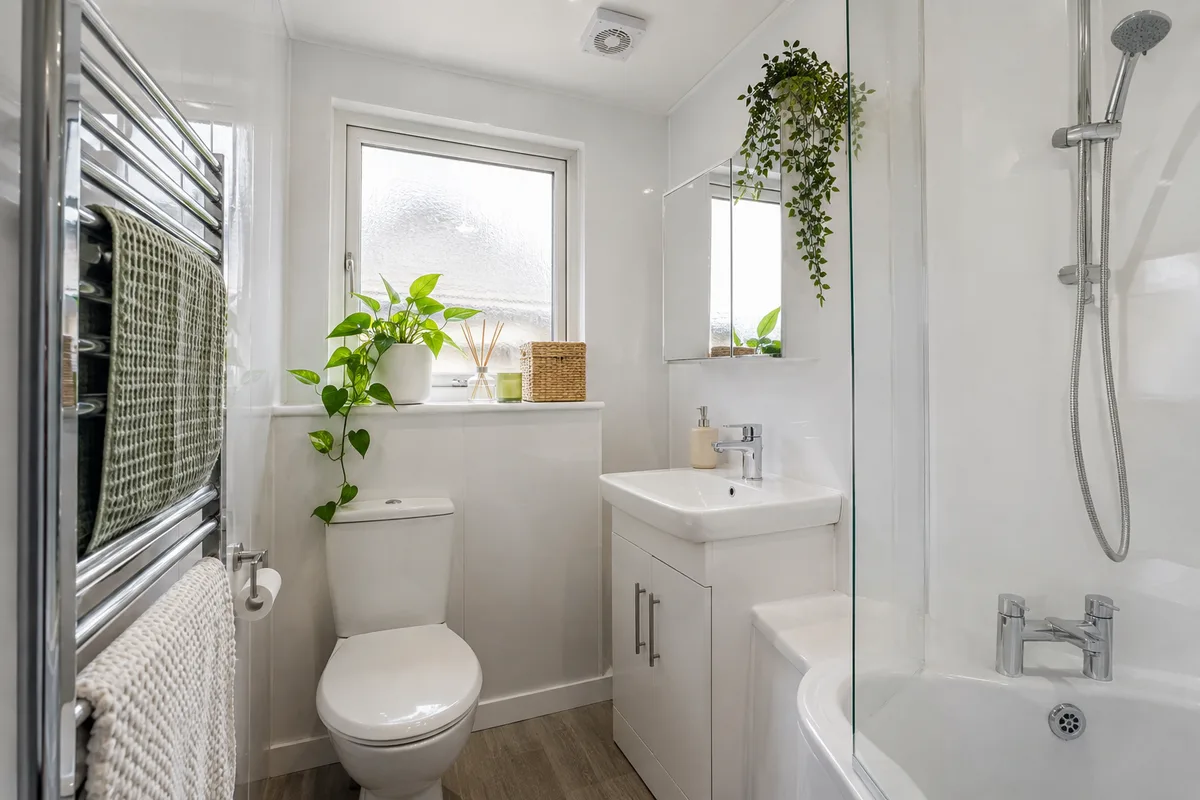
Mould in a small bathroom is almost always caused by steam that has nowhere to go. Fix the ventilation and the heat, choose surfaces that wipe clean, and the mould usually stops coming back. First, though, work out whether you have condensation, a leak or something else, because each needs a different cure.
Condensation, leak or rising damp: tell them apart
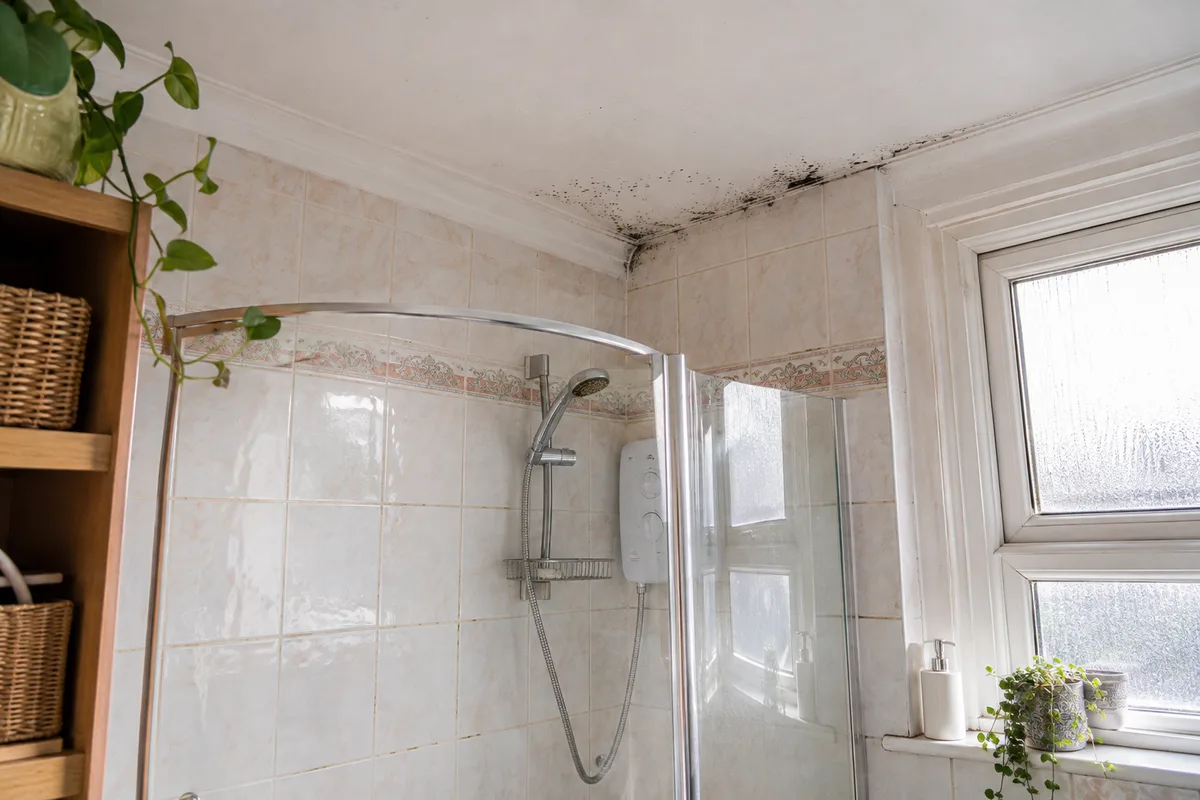
Condensation shows as water droplets on walls, windows and mirrors, and as black or grey spots in corners and on the ceiling. It appears after showers and baths and clears slowly. The pattern follows cold surfaces, such as outside walls and the ceiling above the shower.
A leak looks different. The stain is often in one place and stays wet whether or not anyone has had a shower. It may grow, and it can show in the ceiling below or in the wall beside a pipe. Our guide on a tenement bathroom leaking into the flat below explains how to trace one.
Rising damp is less common in a bathroom, and it usually shows as a tide mark low on a ground-floor wall. Do not assume. Have a professional look if you are unsure, because treating the wrong cause wastes money.
Why small tenement bathrooms get mould first
A small room has little air, so a hot shower fills it with moisture quickly. Many tenement bathrooms have no window, a weak fan or no fan at all. Thick old walls stay cold, and warm, wet air cools and drops its water on them.
Old paint, cracked grout and open joints give mould a place to grow. Once it has a foothold, it keeps coming back. Wiping it away without fixing the cause only buys you a few weeks.
The good news is that a small room is also quick to fix once you know the cause. The same changes that help any bathroom help a tenement one, and they are mostly about air and warmth.
Ventilation that actually clears the steam
The fix is a fan that is strong enough for the room, vents to the outside and gets used. A fan that blows into a loft or ceiling void does not remove the moisture. It just moves it.
If you have no window, read our guides on windowless tenement bathroom ventilation and fitting an extractor fan with no outside wall. They explain the duct routes and fan types that work in a tenement.
A timer or humidity sensor helps. The fan keeps running after you leave, so it clears the last of the steam. Leave the door open a little afterwards, and wipe down the glass or tiles, to speed up drying.
Heat the room, not just the water
Warm surfaces collect less condensation. A cold bathroom wall is where steam turns to water. A heated towel rail, a radiator or an electric heater keeps the room warm enough that moisture stays in the air until the fan removes it.
A towel rail also dries towels, which is a big source of moisture in a small room. Damp towels left on a hook add to the problem.
Our guide to heating a small tenement bathroom compares the options. If you are looking for a bathroom renovation quote in Glasgow, Dundee or Perth, ask for the heating and the fan to be planned together, which gives a better result than fitting each separately.
Surfaces that resist mould and wipe clean
Choose finishes that do not soak up water. Large-format wall panels have few joints, so there is little grout for mould to grip. Tiles work well if the grout is sealed and kept clean. Our guide on wall panels or tiles in a tenement explains the trade-offs.
Use a good bathroom paint on the ceiling and any painted walls. Standard emulsion may not cope with steam, and it can peel. Bathroom paint is made to resist moisture and to wipe clean.
Seal around the bath, tray and basin with a good silicone sealant, and renew it when it blackens or shrinks. Floors should be waterproof and sealed at the edges. Small details like this stop water finding its way into places you cannot see.
Fixing the cause during a refit
A full refit is the best moment to put things right. The old fittings are out, the walls are open and the floor can be checked. Any hidden damp can be dried out and repaired, instead of covered over.
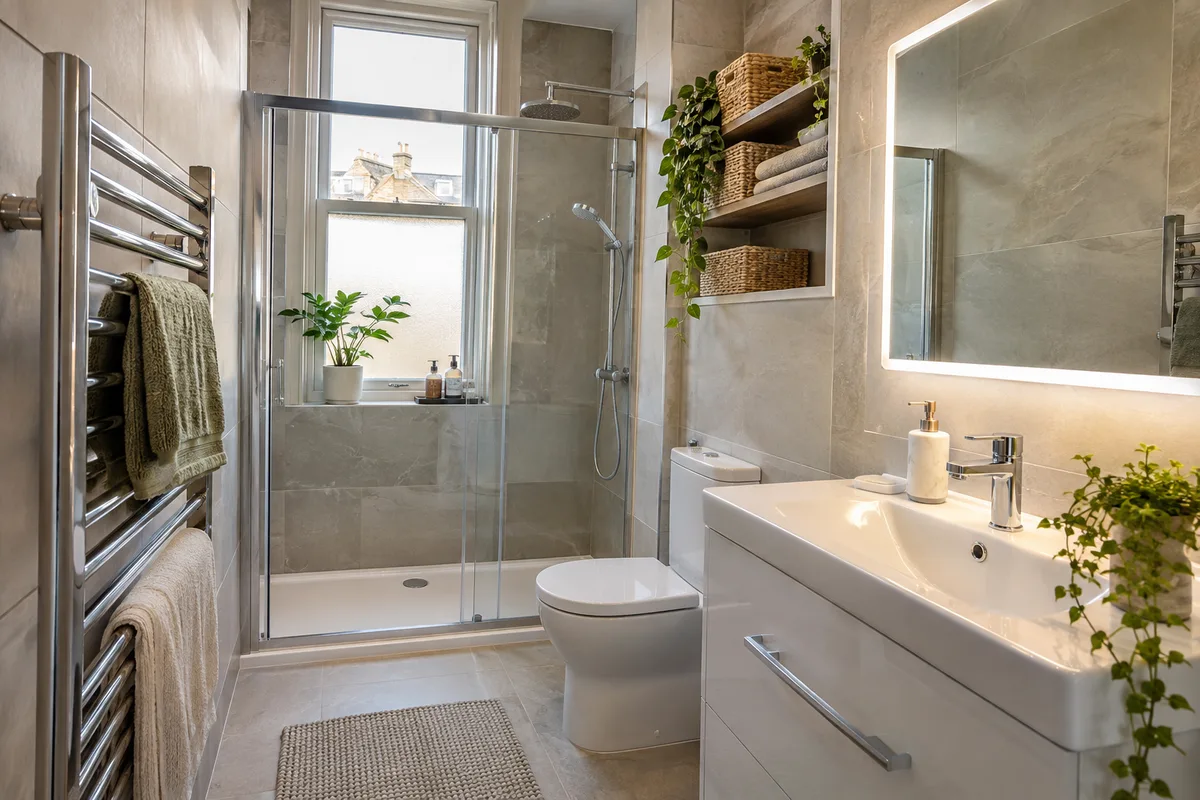
Check the ceiling, walls and floor for damage, plan a fan that vents properly, fit a heated towel rail or heater and waterproof the shower area. Then finish the room in surfaces that resist moisture. When design, supply and installation are done together, the pieces work as one system.
Mould that comes back after painting is a clue that the cause is still there. Our bathrooms start from £3,995, with finance from £22 per week* subject to status. If you want to talk it through, ask for a tenement bathroom quote in Edinburgh, Hamilton or Falkirk.
When to call the council or a surveyor
Call a surveyor or damp specialist if the damp is widespread, keeps growing or you suspect rising damp, a leaking roof or a failed gutter. A building problem is not a bathroom problem, and a new bathroom will not cure it.
If you rent, or the problem comes from another flat, speak to your landlord, your neighbour or your factor. Your local council may be able to advise on damp and housing conditions, and the mygov.scot website points to the right service.
If anyone in the home has health concerns, NHS inform has information on mould and health. For more about the repair side, see tenement bathroom renovation permissions and our bathroom gallery for ideas.
Guidance reviewed 12 November 2026. Technical and permission requirements depend on the property and proposed work; relevant guidance is linked in the article.