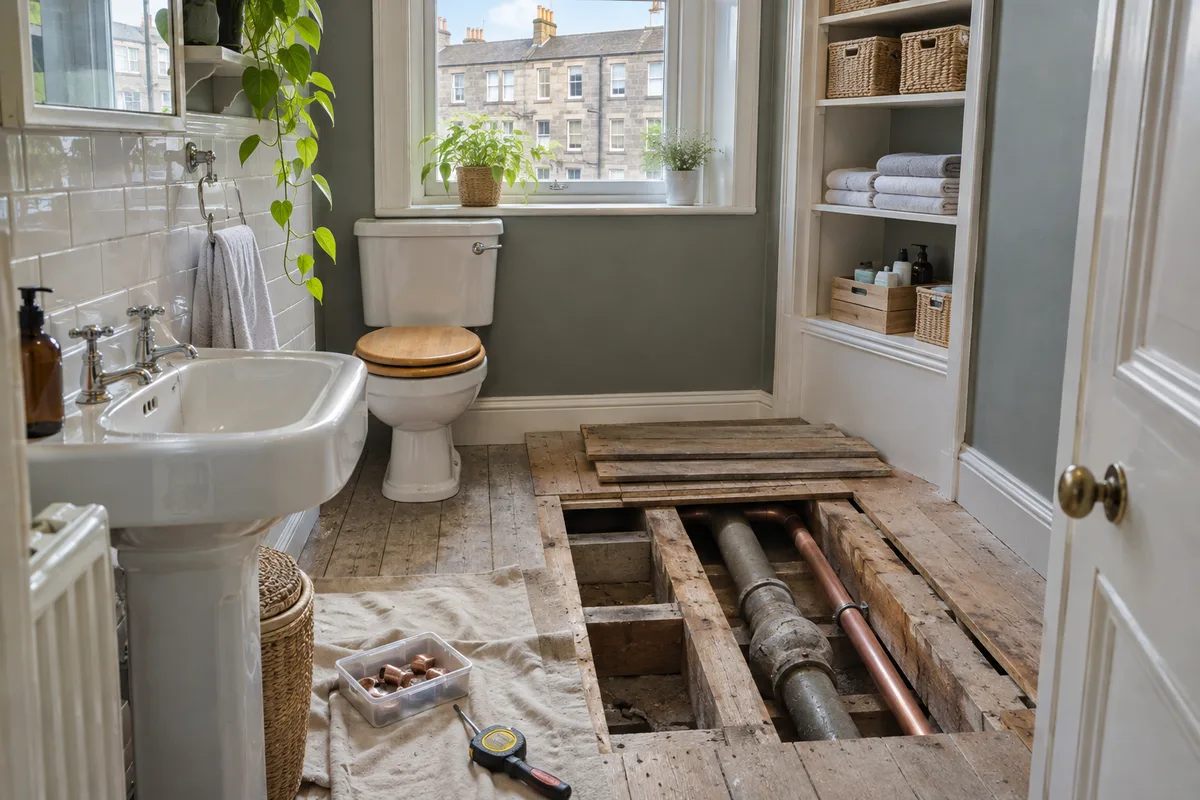
Old lead pipes turn up in many older tenement flats, and a bathroom refit is a good moment to deal with them. The pipes are often hidden under floorboards or behind boxing, so you only see them once the room is opened. This guide shows how to spot lead, what to replace during a refit, and what to check about the stopcock and your water supply.
How to spot lead pipework
Lead pipe is dull grey and soft. Scratch it gently with a coin and the surface shines like silver. It bends easily, has no joints along a straight run and often has a swollen, rounded joint where plumbers once wiped the connection by hand. A magnet will not stick to it, which separates it from old steel pipe.
Look where the water comes into the flat, under the sink, beside the bath and under bathroom floorboards. Copper is orange-brown, plastic is white, blue or grey and has a smooth feel, and lead is the heavy, dull grey one.
If you are not sure, do not scrape or file it. Take a clear photo and show us at the survey. Scottish Water also has advice on lead and your water, including how to check your own supply.
Why replace lead during a bathroom refit
During a refit the floor and wall are already open. Replacing lead then costs far less effort than opening a finished bathroom again later. New pipe in copper or plastic is cleaner, easier to join and works with modern valves and showers.
Lead can also cause trouble that has nothing to do with health. It is soft, so it dents, kinks and splits. Joints made long ago can weep slowly, and old repairs often use a mix of metals that corrodes. A slow leak under a floor can damage the ceiling of the flat below. Our guide to leaks into the flat below explains why that matters in a tenement.
We recommend replacing any lead we find in the bathroom as part of the job, and we can tell you how far the lead continues. Our tenement bathroom renovation page explains how we plan the whole job around what is under the floor.
Finding and checking the stopcock
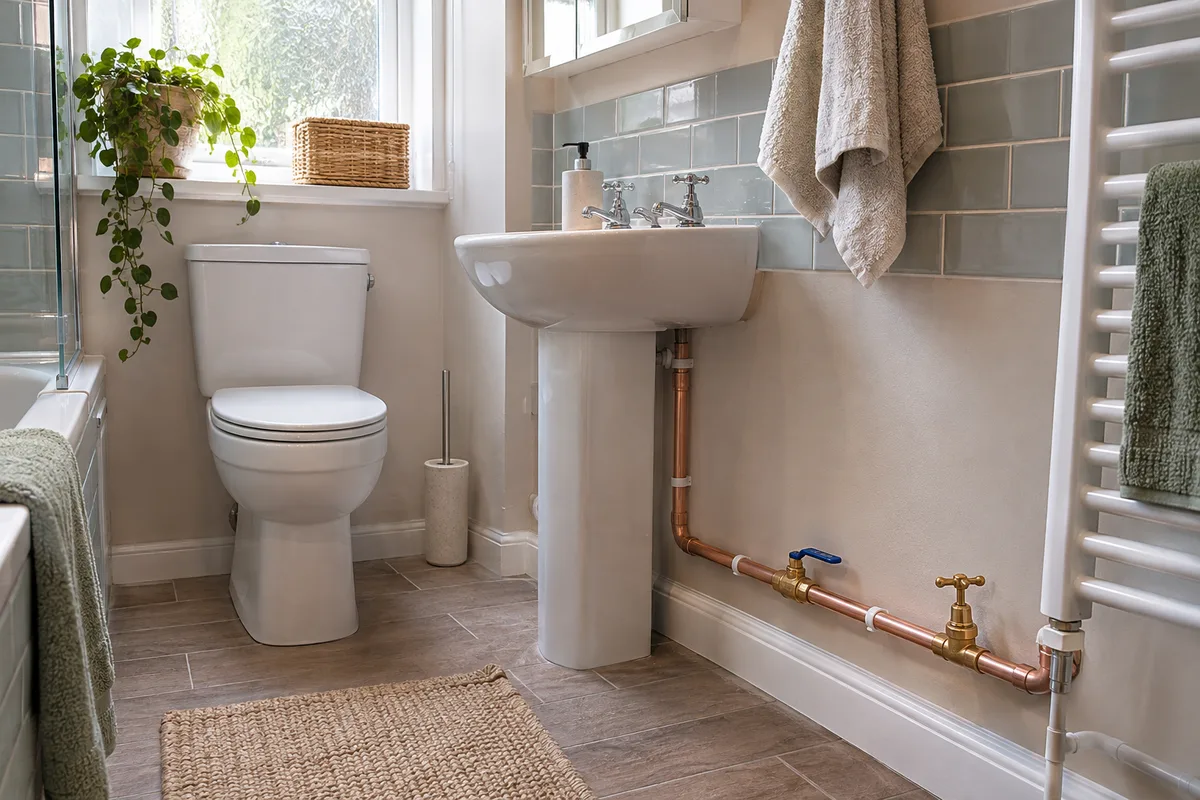
The stopcock is the tap that turns off all water to your flat. In older tenements it may be under the kitchen sink, in a hall cupboard or under the floor, and it may not have been turned for decades. Find it before the refit starts and make sure everyone in the household knows where it is.
A stopcock that does not turn, drips or has seized is a risk. Forcing it can break the pipe behind it. We check it at the survey, and where it is faulty we fit a new valve as part of the job. We also add isolation valves on the bathroom supplies, so that a future repair means turning off a single tap, not the whole flat.
If the stopcock is on a shared pipe or in a common area, we cannot replace it without agreement from the other owners. We will explain what that means for the work.
Water pressure after new pipes
New pipework in a larger bore can improve flow, especially where the old lead was narrow or furred inside. But pipes alone do not fix poor pressure. A low-pressure mains, a shared supply or an old tank can all hold it back.
A shower that struggles before the refit may still struggle after it if the cause is elsewhere. We check flow and pressure at the survey and suggest a shower that suits your system. Our guide to shower water pressure in a tenement sets out the options, including when a pump or an electric shower is the better choice.
Old cold water tanks and gravity systems
Some older flats still have a cold water tank in the loft or a cupboard feeding the bathroom by gravity. These systems give low pressure at the shower, and old tanks may be dirty, lidless or lined with old materials.
When we open a bathroom we check whether the tank is still in use. Sometimes it can be removed and the bathroom fed from the mains instead, which improves pressure. Sometimes it cannot, because the building was designed around it. Either way we tell you plainly before we start.
If you plan to hide new pipes behind walls, see our guide on boxing in pipes, which explains how we leave access to valves and joints.
What we check before quoting
At the survey we look for lead where the pipes are visible, locate the stopcock and test the flow at the taps. We note what type of tank or boiler feeds the bathroom and where the pipework runs. We also ask what you already know about previous plumbing work.
Then we explain what we found and what we would replace, so your quote covers the pipes as well as the fittings. If something is hidden, we say so and tell you how we would deal with it once the floor is open.
To arrange a survey, call us or ask for a free quote.
Guidance reviewed 14 November 2026. Technical and permission requirements depend on the property and proposed work; relevant guidance is linked in the article.