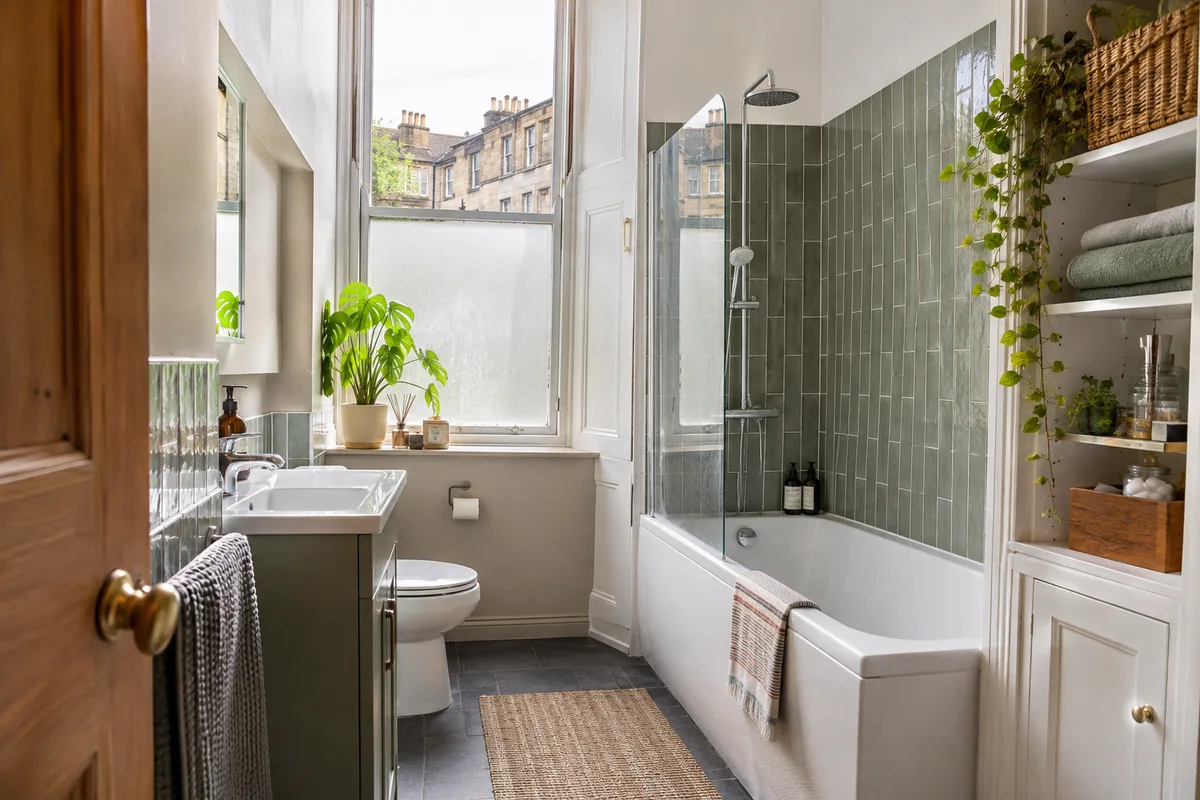
You usually do not need your factor’s or neighbours’ permission to refit the inside of your own bathroom. You do need to check your title deeds, tell people what is happening and avoid harming shared parts of the building. A short, friendly heads-up before work starts prevents most of the trouble.
What the title deeds and the Tenement (Scotland) Act say
Check your title deeds first, then the Tenement (Scotland) Act 2004 for anything they leave out. The deeds say what you own, what is shared and what you must not do. In many tenements, the inside of your flat is yours, while the roof, the stair, the outer walls and shared pipes belong to all the owners together.
Where the deeds are silent, the Tenement (Scotland) Act 2004 sets out default rules for the shared parts. It covers things such as who must pay for common repairs and how owners decide on them. The Act is not light reading, so do not worry if you only skim it.
We are not solicitors, and this is not legal advice. If your deeds are unclear or something looks restrictive, ask a solicitor. For plain-English help on tenement rules, Under One Roof is a good starting point.
When the factor needs to know
Tell the factor if your work touches anything shared. A factor manages the common parts of your building for the owners. That includes the soil stack, shared water or gas pipes, the roof, the outside walls or the stair.
A refit that leaves the layout alone often needs nothing more than a courtesy note. A refit that moves the toilet, adds a vent through an outside wall or connects to a shared stack is different. In that case, ask first.
The factor may also have rules about working hours, deliveries and waste. Some buildings need a notice in the close. Ask what is expected before the work starts, not after a complaint. Our guide on tenement bathroom renovation permissions covers the checks in more detail.
Telling neighbours about noise, water off and the close
Tell your neighbours before the work starts. Say roughly when it will begin, what days there will be noise, and when the water might be off. Many people are happy if they are asked politely first.
Water shut-off can affect other flats if your supply is shared. Ask your installer to tell you ahead of time, so you can warn the people it affects. Leave a note in the close, or a message to the neighbours directly above and below.
Noise is the main complaint. Drilling, breaking out tiles and moving heavy items are loud. Agree sensible hours and stick to them. A cup of tea and an apology goes a long way.
Protecting the stair and arranging skips and deliveries
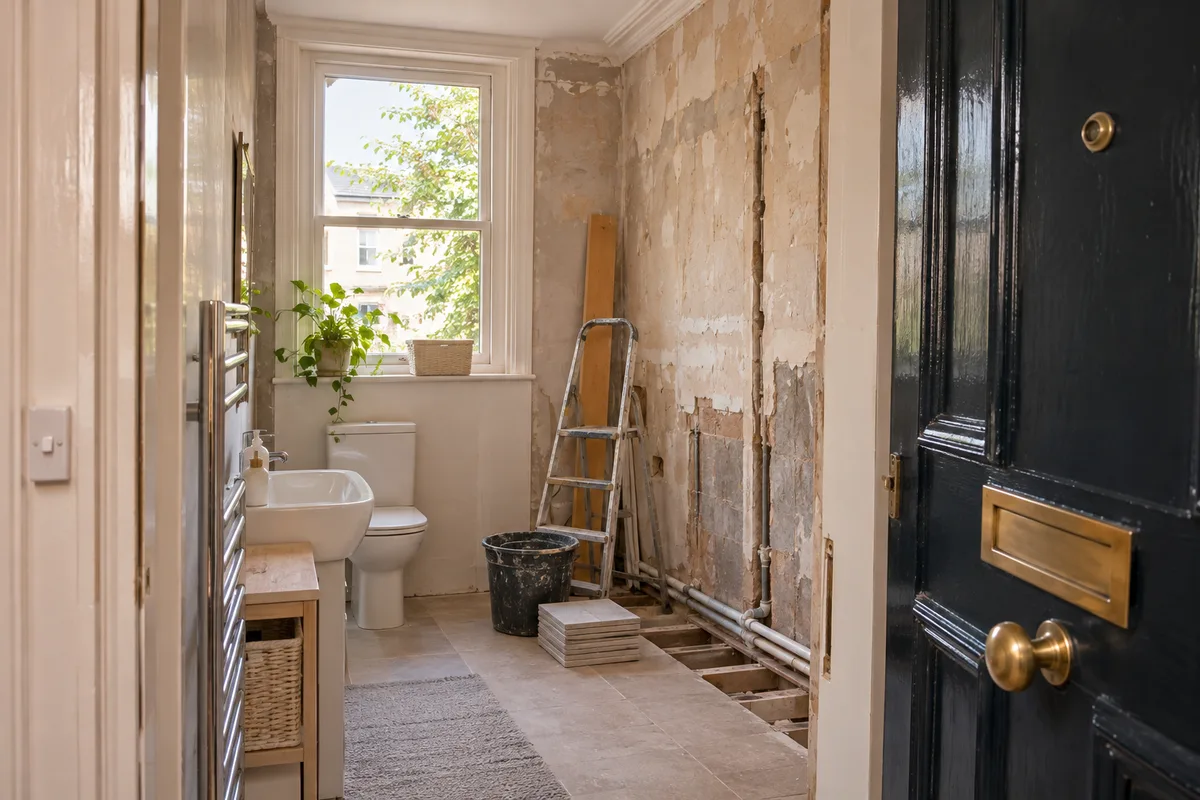
The stair and close are shared, so they need protecting. Floor covering, wall protection and a daily sweep keep the stair tidy. Dust and rubble tracked up and down are another source of complaints.
Deliveries need planning. A new bath or tray is bulky, and a narrow stair makes it hard to carry. Tell your neighbours when a delivery is expected. Sort out parking, since a skip or van may need a permit or space on the street.
A skip on a public road usually needs permission from your local council. Check before you order one. Plan the logistics, and still tell the people who live there.
Insurance: yours and the building’s
Check your home insurance before work begins. Some policies need you to tell the insurer about major building work, and some limit cover while it takes place. Ask what happens if there is a leak into a neighbour’s flat.
The building may have its own insurance for the shared parts. Your factor can tell you what it covers. Contents and your own fixtures are usually your responsibility, and that includes your new bathroom.
Keep documents. Quotes, invoices, certificates and photographs of the work are useful if something goes wrong later. Our accreditations page shows our Gas Safe and NICEIC registrations, so you can include proof of qualified work in your records.
A simple note that keeps everyone on side
A short note does the job. Say who you are, which flat you are in, what you are doing and roughly when it starts. Give a contact number for questions. Say how you will keep the stair clean. Thank people for their patience.
Pin it in the close and post a copy to the neighbours directly above and below. If you have a factor, send them the same note with a line asking if they need anything more from you.
Planning ahead matters most for a bigger project. Our guide to top-floor tenement bathroom renovation shows how access and shared roofs add to the checklist. If you are ready to start, ask for a tenement bathroom renovation quote in Paisley, Rutherglen or Kirkcaldy. We design, supply and install the whole room, and our bathrooms start from £3,995, with finance from £22 per week* subject to status.
Guidance reviewed 12 November 2026. Technical and permission requirements depend on the property and proposed work; relevant guidance is linked in the article.