Bathroom adaptations in Scotland can often be paid for, or part-paid for, with help from your council. The route starts with an assessment, not a quote, and the order matters. This guide explains the steps in plain words. We fit bathrooms, so we do not run grants or make applications for you, but we can help you plan work that suits what the assessment recommends.
Who can get help with a bathroom adaptation
Help is aimed at people whose health or mobility makes an ordinary bathroom hard or unsafe to use. That might be because of a disability, an illness, an injury or the effects of getting older. The test is about what you need to do safely at home, not simply your age.
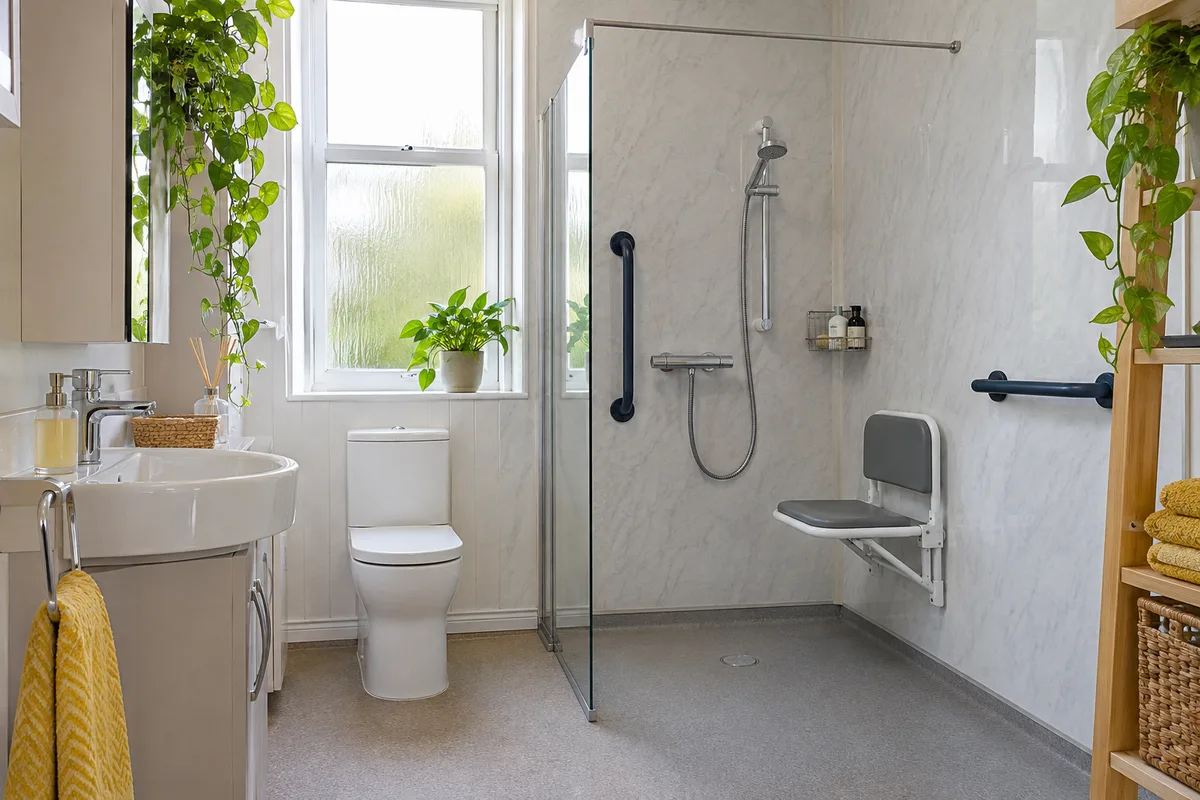
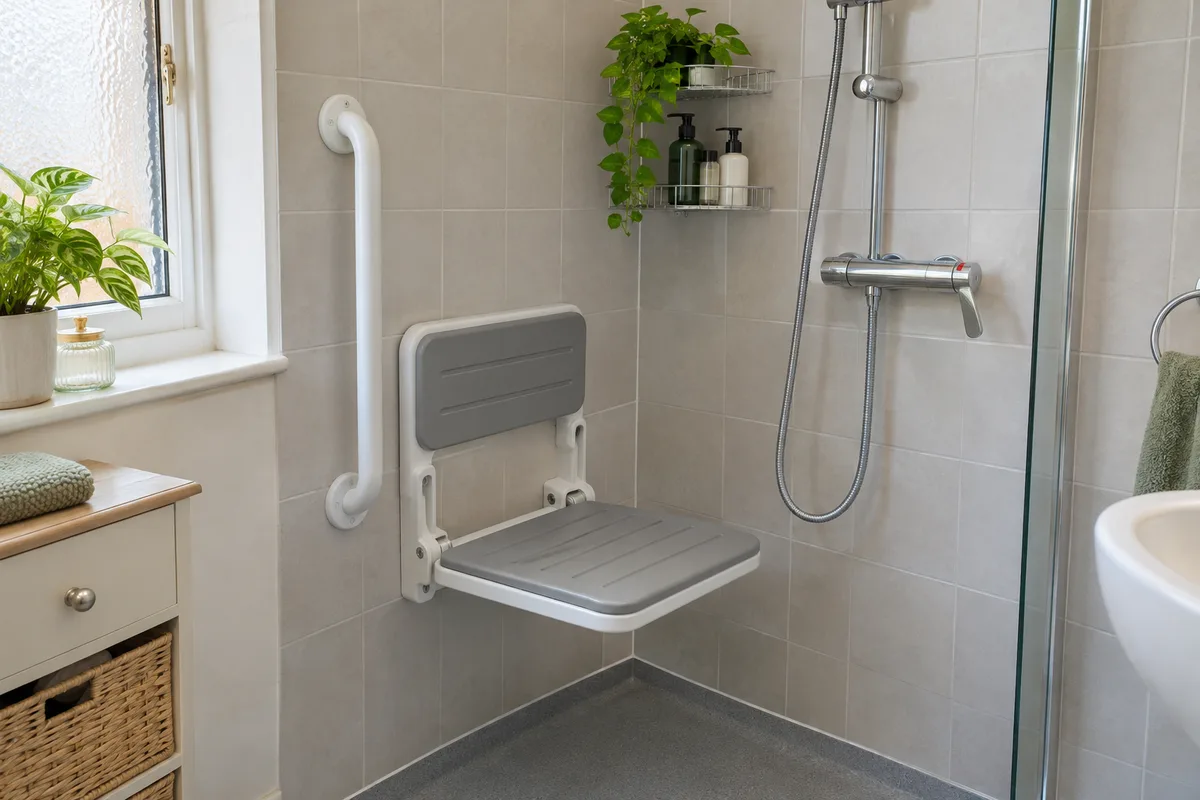
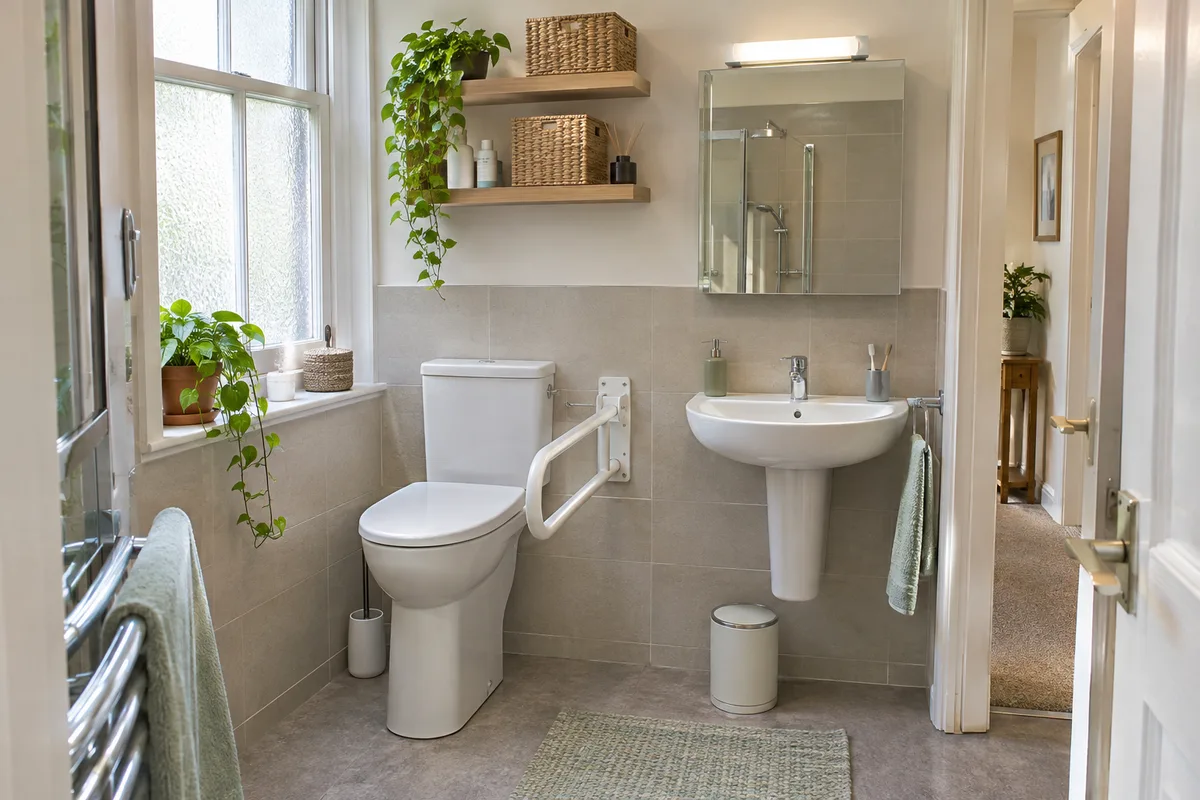
Typical changes include replacing a bath with a level-access shower, adding grab rails, fitting a shower seat, raising a toilet or widening a doorway. Smaller items and equipment are often handled differently from major building work, so ask your council which category applies.
If you are planning a bathroom for someone with limited mobility, our guide to an accessible bathroom in a tenement flat covers the design side. This article covers the paperwork and the money.
Start with an occupational therapy assessment
The first step is to contact your local council, usually its social work or housing adaptations service, and ask for an assessment of your needs. An occupational therapist normally carries it out. They look at what you find difficult at home and suggest ways to help, which may include equipment or building work.
The assessment matters because the council uses it to decide whether a major adaptation is essential. The Scottish Government explains the process in its guide to funding adaptations for homeowners. You normally need one to apply for a grant, so do not skip it, even if you plan to pay privately.
Ask for the recommendations in writing. They are your brief for the work, and any fitter should be given a copy.
Owners, private tenants and council tenants
What you do next depends on who owns your home. The Scottish Government has a separate guide for homeowners and for private tenants, and both are on gov.scot. Your council can send the right one.
If you own your flat or rent privately, you can ask your council for help under its Scheme of Assistance. Every council must publish a statement of what help it gives. If you rent from a council or a housing association, your landlord is usually responsible for adapting the property, so speak to them first. Check the details with your landlord, as arrangements differ.
Tenement flats add a point worth knowing. Changes inside your own flat are usually yours to decide, but any work that touches shared pipes or the shared stack may need to be agreed with the other owners. Our guide to the factor and neighbours explains how to raise that.
How the council can help with the cost
For owners and private tenants, councils can give a grant towards adaptations that the assessment finds essential. The Scottish Parliament's briefing on grant for housing adaptations describes how this works. How much you get can depend on the council and your circumstances, so we will not quote a figure. Ask your council what share of the cost it would pay, and whether you would need to pay the rest.
Do not start work before the council has approved it. A grant is generally only paid for work the council has agreed is essential, so spending first can put the money at risk. If you disagree with a decision about your eligibility, you can complain to the council.
We do not carry out council-funded work or handle grant applications. If you pay for work privately, we can quote for it and fit it, using the assessment as the guide.
VAT relief on some adaptation work
Some building work for a disabled person is zero-rated for VAT. HMRC's VAT Notice 701/7 sets out the rules. Providing, extending or altering a bathroom because of a person's disability can qualify, but simply replacing old sanitary ware with new does not.
The person must be chronically sick or disabled, and the work must be for their private home. You may be asked to sign a declaration confirming you are eligible. The rules have detail, so ask HMRC or your adviser before relying on relief. We will say on a quote what the VAT treatment is, once we know the work is eligible.
Other help in Scotland
Grants are not the only option. Some people are helped by charities, local advice services and the Scottish Government's list of organisations in its homeowner guide. Independent advice services can explain your options and help you complete forms.
If you decide to pay for some or all of the work yourself, you can spread the cost. Our page on bathroom renovation on finance explains how that works.
Planning the work so it suits the assessment
Once you have the recommendations, plan the bathroom around them. A level-access shower with a seat and rails, a raised toilet and a basin you can reach from a seat might all be listed. Check them against the room size before you choose fittings.
In many flats the main change is replacing a bath. Our guide to bath to shower conversion in a tenement shows how that works. Our accessible walk-in showers page shows what we fit, and our article on small bathroom shower enclosures helps with choosing the enclosure.
Show the assessment to us at the survey. We will check the layout against it and tell you if anything will not fit. To talk it over, call us or ask for a free quote. For safe, step-free walk-in shower installation, we can help you plan.
Guidance reviewed 14 November 2026. Technical and permission requirements depend on the property and proposed work; relevant guidance is linked in the article.