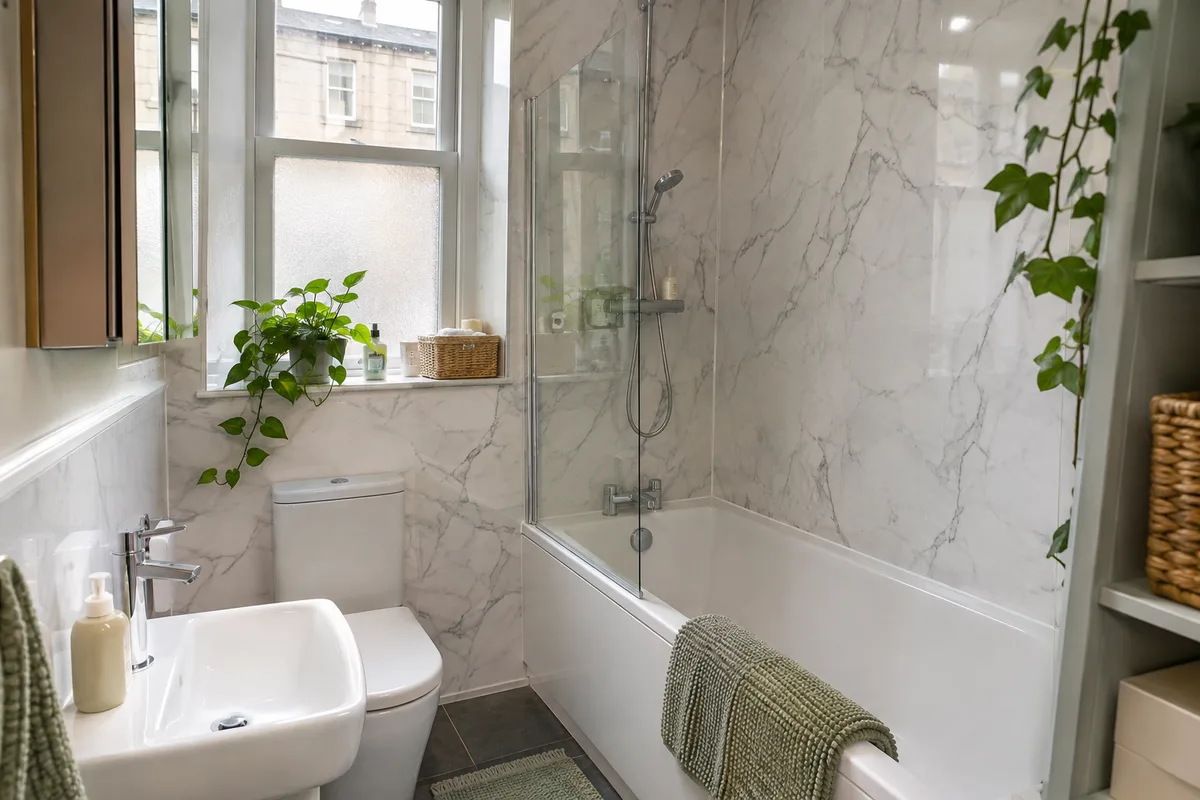
Bathroom panels over existing tiles can save a lot of mess, but only when the tiles underneath are in good order. Fitted over a weak wall, the panels will just hide a problem for a while. This guide shows how to tell if your old tiles can stay, when they have to come off and what to check before you commit.
Why fit panels over tiles at all
The main reasons are speed and cleanliness. Taking old tiles off a wall makes a lot of dust and rubble, and often takes plaster with it. Panels fitted over sound tiles avoid that, and the shower can be back in use sooner.
Panels also have very few joints. A large panel has a vertical joint every metre or so, whereas tiles have grout lines every few centimetres. That means less grout to clean and fewer places for mould to start.
For a full comparison of the two finishes in a tenement flat, see our guide to wall panels or tiles in a tenement bathroom. This article is only about the case where tiles are already on the wall. You can see the finishes we fit on our bathroom styles page.
Check the tiles are sound first
Panels are only as good as the wall behind them. Before anything goes over old tiles, the tiles must be firmly stuck, flat and dry.
Tap each tile with the handle of a screwdriver. A solid, sharp sound is good. A hollow or dull sound means the tile has come away from the wall. Look for cracked tiles, crumbling grout and tiles that move when pressed. Run a straight edge across the wall to check it is flat. A wall that is bowed or stepped will make the panel bow too.
Smell and look for damp. Dark patches behind the grout, soft grout and a musty smell all suggest water is getting behind the tiles. Our article on damp and mould in a small bathroom explains what to look for. Do not panel over a damp wall, because the moisture is trapped and gets worse.
When the old tiles have to come off
Tiles must come off if more than a few are loose or hollow, if the surface is not flat, or if there is any sign of damp. They must also come off if the tile layer is thick, because adding a panel on top would push the wall out and swallow too much room.
Old tiles on a lath wall can be a particular problem. They are heavy, and the plaster behind may be failing. If tiles sound hollow in many places, take them off and check the wall. Our guide to lath and plaster bathroom walls explains what we look for behind them.
A wet area such as a shower needs the highest standard. If there is any doubt about the wall, we would rather strip it, fix the problem and fit a waterproof board. It is more work, but it lasts longer.
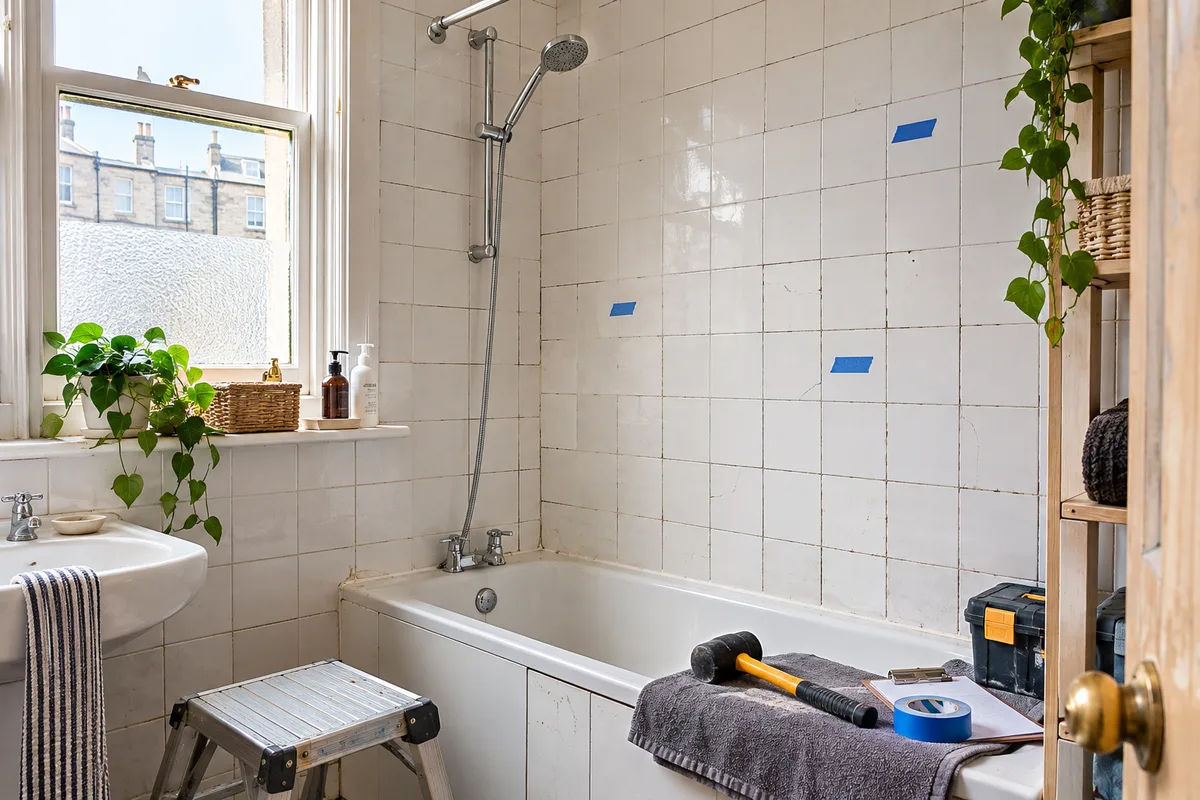
Space lost around fittings and window reveals
A panel over tiles adds thickness to the wall, often a centimetre or more once the fixing and the old tile layer are counted. In a small bathroom that matters.
Check three places. First, the shower tray or bath edge. The panel must sit properly over the lip, and a thicker wall may make a bath or tray too tight. Second, the window reveal. The panel must return neatly around the sill. Third, the door frame, towel rails and the toilet pan. Pipes and fittings that were fixed to the tile surface may need to be moved out.
We measure these points before quoting. If the extra thickness would cramp the room, taking the tiles off may be the better choice. Our guide to decorating a small bathroom has more on keeping the space feeling open.
Sealing joins and edges in the shower
Water gets in at joins, not through the face of a panel. Every vertical joint, corner and edge in a shower needs to be sealed with the right sealant, and any trim must sit tight.
Panels with tongue and groove edges lock together and are easier to seal. Inside corners should have a bead of sanitary silicone, and the shower tray joint needs special care. Use a sealant made for bathrooms, and let it cure before using the shower.
A good seal is not permanent. Silicone should be checked every year, and replaced if it is cracked or black with mould. Poor sealing is the most common reason panels fail, so we take our time over it.
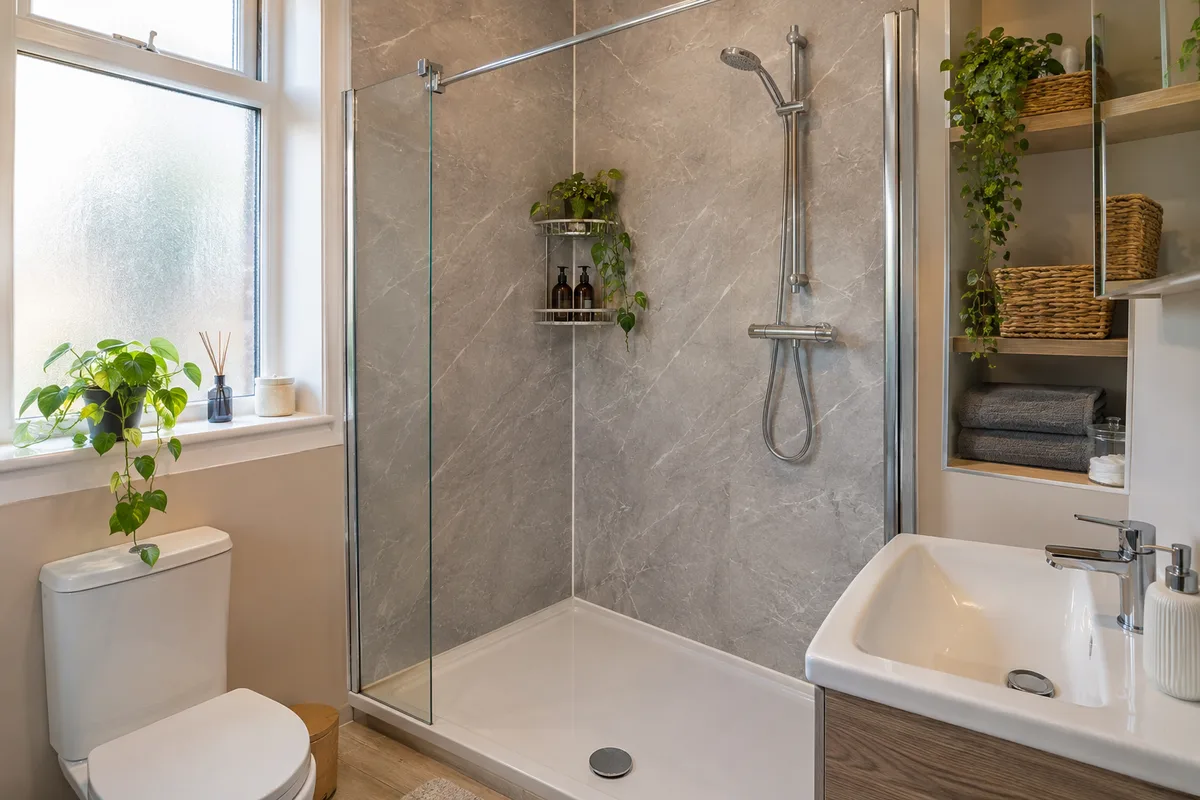
Panels over tiles on a budget refit
If you are working to a budget, panelling over sound tiles can reduce the cost of preparation and labour. It suits a bathroom where the tiles are in good condition and the room is simply tired.
But do not choose it only on price. If the tiles are poor, the saving disappears once we have to make good the wall. Our small bathroom ideas on a budget shows where the money is best spent. A properly prepared wall is usually worth more than a cheaper finish on top of a bad one.
What a fitter checks before quoting
When we visit, we check four things. Are the tiles stuck firmly, is the wall flat, is there any damp, and how much space will we lose? We also look at the trim, the corners and where the panels will meet the tray, bath and window.
Then we tell you plainly whether panels over tiles will work. If not, we explain why and give a price for stripping the wall. You then choose with the facts in front of you. To arrange a visit, call us or ask for a free quote. Our bathroom styles show finished panel looks.
Guidance reviewed 14 November 2026. Technical and permission requirements depend on the property and proposed work; relevant guidance is linked in the article.